Before the birth of my first baby, my doula suggested that I bring a camera to the hospital and think about designating someone to take pictures in the delivery room.
"You may regret it someday if you don't have any pictures. At least this way, you'll have them if you want them."
I didn't take the pictures.
But that's just who I am.
I'm the mom who never has a camera.
Anywhere you go, moms seem to have cameras. Other women seem obsessed with documenting the tiniest details of their children's lives, from delivery onward. They compile albums, they scrapbook, they have memberships to portrait studios because they visit them so frequently.
This is not to say that I have no pictures or that I see no value in capturing freeze frames of fleeting moments. When I remember, or when the camera happens to find it's way into my purse or my car, I've snapped some beautiful, candid shots. The walls of my home are covered with many of my favorite family photos, and they are among my most cherished possessions. But most of them are pictures I came by randomly, and only a couple are from real "sittings" with a professional photographer. I like it that way. It feels real to me. It feels like I'm living my life with my family and occasionally taking snapshots as reminders of the good times we've enjoyed, rather than studiously documenting every moment for posterity.
Yes, there are times when I've missed capturing special moments because I haven't had my camera with me. There are certainly pictures that I don't have and have come to wish I had taken.
But for the most part, I like my haphazard way of collecting pictures -- an occasional portrait sitting here, some candid shots there. It isn't right for everybody; I know that there are lots of women who love scrapbooking, and I'm sure that somewhere there are some who have even scrapbooked their births . . .
As for me, I still haven't come to regret my decision not to take those birth pictures. Those images are instead among the many rich and vivid memories that are stored carefully away on the hard drive of my mind.
And that's a hard drive that can never be erased.
***************************************
What kind of picture-taker are you? Do you take tons of photos and schedule portrait sittings for every birthday? Or do you always find yourself without a camera? What kind of family photographs are important to you?
Friday, August 27, 2010

Wednesday, August 18, 2010
Spreading the Word: Postpartum Depression, AOL, and Mothers Who Harm Their Children
I've never experienced postpartum depression.
I've experienced some pretty dark moments as a mother, moments when sleep deprivation and anger and frustration and exhaustion and despair and the stresses of everyday life seem overwhelming.
Moments when I've wished to be anywhere but here with this screaming, endlessly needy infant.
But I've never come close to experiencing postpartum depression. I can't even imagine how truly terrifying it must be for a mother to endure.
And, like Annie at PhD in Parenting wrote, there are other women, women who have been there, whose voices need to be heard.
An article appeared on AOL today about the recent murder of two young South Carolina boys by their mother. It included a comment made by a criminal profiler, a woman named Pat Brown who stated that postpartum depression is a "crock."
And there are some very smart, very strong women who have been very pissed off by this blanket statement about what is a very real illness.
I don't know the specifics of the case in South Carolina, but, in this situation, they don't seem to matter. Pat Brown wasn't just speaking specifically about this one case. She was making a blanket statement about women everywhere.
If you're interested in this story, you can read the AOL article here. Keep in mind, however, that it has already been edited to remove the controversial comments.
If you're interested in some smart, serious discussions from women who have battled depression first-hand, then here are the links that you really need to read.
Read this post from Postpartum Progress.
Or visit Catherine at Her Bad Mother and read her post The Monster In the Closet.
You can also read An Open Letter to Pat Brown (the profiler who made the offensive statement) at the Pretty Babies blog. And the post has been updated to include Pat Brown's response.
These women, and women like them, are the experts. They may not be professionals, and they may not have all the answers, but they've been there.
They've been there. In my mind, that gives them a very real right to a very valid opinion.
The criminal profiler? Maybe, and that's a big maybe, she has a valid opinion in the specific case that she has been working on.
But an opinion on postpartum depression in women everywhere?
No way in hell.
And AOL should know that.
I've experienced some pretty dark moments as a mother, moments when sleep deprivation and anger and frustration and exhaustion and despair and the stresses of everyday life seem overwhelming.
Moments when I've wished to be anywhere but here with this screaming, endlessly needy infant.
But I've never come close to experiencing postpartum depression. I can't even imagine how truly terrifying it must be for a mother to endure.
And, like Annie at PhD in Parenting wrote, there are other women, women who have been there, whose voices need to be heard.
An article appeared on AOL today about the recent murder of two young South Carolina boys by their mother. It included a comment made by a criminal profiler, a woman named Pat Brown who stated that postpartum depression is a "crock."
And there are some very smart, very strong women who have been very pissed off by this blanket statement about what is a very real illness.
I don't know the specifics of the case in South Carolina, but, in this situation, they don't seem to matter. Pat Brown wasn't just speaking specifically about this one case. She was making a blanket statement about women everywhere.
If you're interested in this story, you can read the AOL article here. Keep in mind, however, that it has already been edited to remove the controversial comments.
If you're interested in some smart, serious discussions from women who have battled depression first-hand, then here are the links that you really need to read.
Read this post from Postpartum Progress.
Or visit Catherine at Her Bad Mother and read her post The Monster In the Closet.
You can also read An Open Letter to Pat Brown (the profiler who made the offensive statement) at the Pretty Babies blog. And the post has been updated to include Pat Brown's response.
These women, and women like them, are the experts. They may not be professionals, and they may not have all the answers, but they've been there.
They've been there. In my mind, that gives them a very real right to a very valid opinion.
The criminal profiler? Maybe, and that's a big maybe, she has a valid opinion in the specific case that she has been working on.
But an opinion on postpartum depression in women everywhere?
No way in hell.
And AOL should know that.
Saturday, August 14, 2010
True Mom Confessions: I Sent My Daughter to Kindergarten Because She Watches Too Much TV
 |
| Photo credit: woodleywonderworks |

Is it really possible that many St. Louis students are headed back to school next week? In the midst of this heat wave? Isn't this one of those, oh, I don't know, really good reasons why school didn't used to start until after Labor Day? And am I actually at a point where I'm old enough to start remembering back in the day?
Just kill me now . . .
My own daughter isn't currently a part of the back-to-school fanfare and won't be headed to school next week -- because we're still finalizing details of where we'll be moving to for this school year, and because I'm still wrestling with my eternally conflicted feelings about home school vs. public school vs. the private schools that we can't afford.
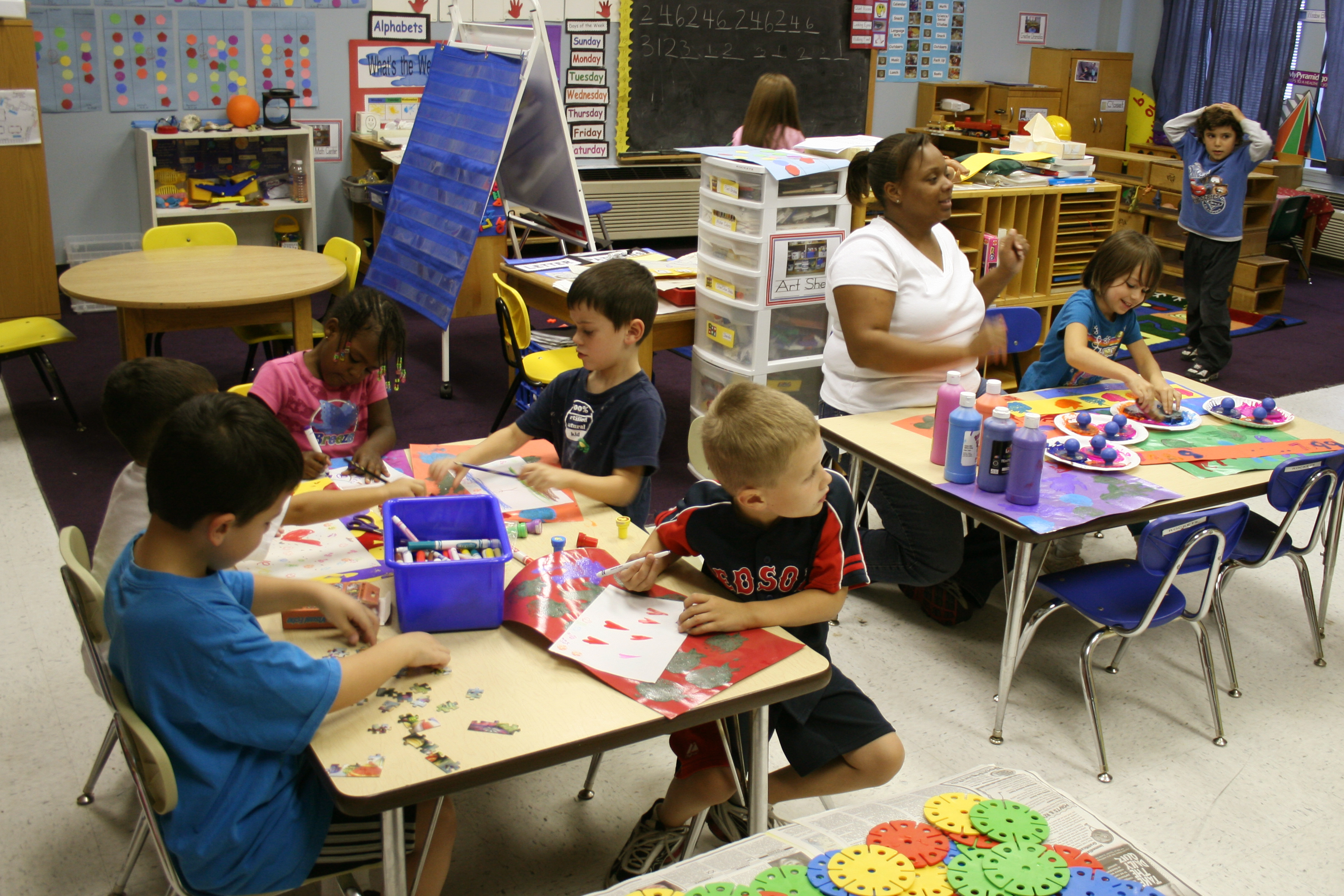
So I've decided to share a post that I wrote last year, about my decision to send my daughter to kindergarten in Florida. It was a tough one, and not one that was reached lightly. But, in the end, it was also a good one. A really good one. So I'm hoping that, by revisiting my thinking back then, I'll be inspired to give myself a much-needed kick in the rear, and will be able to make a decision one way or the other about what to do this year. And then, you know, move on.
Or maybe not. I guess we'll see . . .
********************************
I sent my daughter to kindergarten because she watches too much TV.
Okay, that's not entirely true . . .
But it's a little more true than I would like it to be . . .
I know that, for most people, you send your child to kindergarten because he or she has turned five by whatever randomly designated "cutoff date" your home state has decreed.
Or you have your child "tested," determine that you have a genius on your hands, and send little Johnny off a year early, despite the fact that, no matter how smart he is, he is in no way developmentally ready for the unavoidable emotional stresses of school.
Yes, that is an unnecessary smart-ass remark.
I, unfortunately, am not one of those people who is content to do something just because someone else said I should.
Especially Florida's Department of Education.
Do you remember the 2000 election and the stellar role that the state of Florida played in that disaster? That tends to make me even more squeamish about the idea of the state government having any sort of a say in my child's education.
I have serious qualms with the public school system in general, and Florida's full-day kindergarten program in particular. And yet, last month, I turned my precious 5 year-old daughter over to that very kindergarten program.
Why, you might ask?
It wasn't because she just happened to turn 5 before September 1. It wasn't because I thought she needed social interaction. It wasn't because I expected her to learn a lot, or thought they might actually teach her something worthwhile. It wasn't even because I needed a break and wanted to have some time away from her.
It was mostly because of the Disney channel.
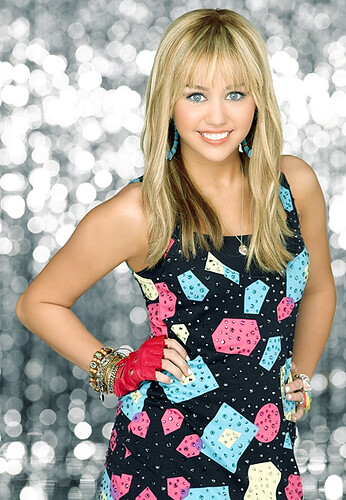
We love the Disney channel in our house: Hannah Montana, The Suite Life (at the Tipton or On Deck), Sonny With A Chance, Wizards of Waverly Place . . . you get the picture.
 |
| Photo credit alacoolk |

And except for the morning (when there is Playhouse Disney, as some of you may know) the shows are on ALL DAY LONG!!!
Now, letting my daughter sit on the couch and watch the Disney channel all day long is in no way my idea of good mothering. And I can honestly -- and I'm breathing a sigh of relief here -- say that there has never been a day when this has happened.
But recently, we've come way too close. I can slowly feel myself morphing into the kind of mom who would let her kids watch TV all day, every day if it meant that I could get even a moment of peace.
So I decided that school just might be a better alternative right now.
For both of us.
She can get out of the house and away from her grouchy, overly-stressed mother, and interact with adults who aren't, well, me.
And I can have six hours a day free from her constant chatter. I wouldn't call it a break, since I'm still chasing a wildly energetic 15 month-old, but at least he doesn't talk yet, and there are moments when I can actually hear myself think.
They're fleeting, but they are there.
Yes, I feel guilty. I feel like she's going to school for the wrong reasons. I worry that I'm killing her creativity and ruining her life. I think about homeschooling, which was (and still is) attractive to me in so many ways, not the least of which is the fact that I wouldn't have to drag my tired self out of bed at the crack of dawn every morning -- okay, okay, neither would she -- I'm supposed to be thinking about what's best for her, not me, I know.
And there's this awesome thing called unschooling where you as a parent don't really have to do anything except trust that they'll learn what they need to know when they need to know it.
This ALL appeals to me.
But, at the moment, she loves kindergarten. She loves her teacher and her classmates and all the daily drama and excitement that comes with a room full of 5 year-olds.
Kindergarten, as it turns out, is a lot more entertaining than I am.
And even though I like to think that, if she were home during the day, I would do all sorts of fun, enriching activities, I know that it would never happen. When you're at a point in your life where you're asking yourself what on earth made you decide that you had it together enough to actually try and raise other people, it just doesn't feel like the best time to take on more responsibility.
So, at least for the time being, I chose kindergarten over the Disney channel. Was it the right choice? I don't know. My hope is that the public school system will teach my daughter something more valuable than what she might learn from Miley Cyrus.
My fear is that it won't.
****************************
In case you were wondering, I'm at a much better place in my life now than I was when I wrote this a year ago . . .
And, yes, my daughter did, in fact, learn more in kindergarten than she would have from Miley Cyrus -- and, given the year that Miley has had, I'm glad that I chose to separate them :)
But I still maintain my overall concerns with our public school system, whether in Florida or Missouri or any other state. One positive experience, with one particular teacher, in one particular school, can't negate what is, overall, a very flawed system.
So now what?
Now, I have some serious thinking to do.
Thursday, August 12, 2010
STL Views and Reviews: Crown Candy Kitchen
 |
If you live in St. Louis, you've probably heard of it.
If you don't live in St. Louis, you may have heard of it as well -- most recently, the St. Louis institution was featured on the Travel Channel's Man v. Food when host Adam Richman failed the Crown Candy Challenge to drink five malts in thirty minutes.
No, it's not the place to go if you're looking for a healthy experience . . .
Crown Candy Kitchen is hailed as one of St. Louis' "oldest and most popular attractions." Since 1913, Crown Candy has been making its own confectionary delights, and serving classic soda fountain treats like malts, phosphates, and giant sundaes.
If it's a hearty meal that you're in the mood for, they also serve sandwiches like a BLT that comes stacked with an entire pound of bacon!!!
They've even had a book written about them, Sweetness Preserved: The Story Of The Crown Candy Kitchen
 .
.So being the good St. Louisans that we are, my husband and I decided recently that we really couldn't get away with never having visited Crown Candy Kitchen any longer.
Taking our kids and checking it out for ourselves just seemed like our civic duty.
But we were kind of disappointed. It didn't live up to all the hype.
If you're looking for a good dose of nostalgia, a visit to Crown Candy Kitchen is like taking a step back in time. It's even still located at its original location on St. Louis Avenue in North St. Louis -- and driving along those streets you can almost see the neighborhood as it must have once been, before the beautiful, Victorian style homes that look like they came straight out of Meet Me In St. Louis became the run-down, bullet-ridden places that they are today.
The candy counter, filled with licorice and giant lollipops and homemade chunks of chocolate, was neat (and thoroughly entertained my kids during our almost hour long wait). But, by today's standards, it was small, and to my grown-up eye, the candy just didn't look as enticing as I thought it should.
I'm not sure what I was expecting -- it's not like I had visions of Willy Wonka's factory dancing in my head -- but the reality just didn't live up to the expectation. I've seen better candy counters in my day . . . Godiva, anybody???
The restaurant boasts ten booths that seat four, and a few more two-seaters. So when they're busy, as they were on the Sunday afternoon when we decided to go, you wait.
And wait. And wait. At one point, the line was out the door and down the street. And when you wait for something that long, especially with young children, you expect it to be worthwhile.
Don't get me wrong, the food isn't bad. It is good. But it's not destination-trip-to-North-St.-Louis-good.
My husband had that BLT (and I quietly pulled slices of bacon off piece by piece lest he have a heart attack right in front of me). I had a Breaded Chicken Sandwich. The chicken was hot, fresh, and juicy, the bread was soft, an the sandwich was slathered with Miracle Whip. I thoroughly enjoyed it. But it was also something that I could make at home. Or get from KFC.
And the ice cream was what truly disappointed us. We ordered a Fire Chief Special Sundae that was big enough for the four of us to share (which at $5.75 it should be). It was smothered in chocolate sauce with strawberries, bananas, nuts, and whipped cream, but it was only so-so as today's ice cream sundaes go.
It was served in a shallow dish, and as we dug in and the ice cream started to melt, it also started to overflow. As in a gooey mess of ice cream soup covering our table and an overzealous toddler who couldn't stop eating long enough for us to wipe it up.
Did I also mention that we were seated at the very first table and that an entire line of hungry customers waiting for a table were standing right next to us watching this all play out? By the end of our meal, all we wanted to do was get the hell out of that place.
So, long story short, Crown Candy Kitchen didn't do it for us. There are lots of better places for ice cream in St. Louis -- Oberweis, Ted Drewes, or Fritz's, just to name a few. At this point, it seems like Crown Candy Kitchen is coasting on their history and their name, and they're popular, well, just because they're popular . . .
And quite frankly, if you want a fat-laden, heart-stopping meal to go along with your sundae, I think a trip to Steak 'n Shake is a better bet.
*******************************
Have you visited Crown Candy Kitchen? What did you order and did you like it? Am I missing something?
Photo courtesy of http://www.flickr.com/photos/irenehsu/with/480934492/
Thursday, August 5, 2010
Why I Find The Stir Annoying As Hell -- or My Response to the Giselle/Breastfeeding-Should-Be-A-Law Controversy
Giselle.
Supermodel extraordinaire.
Once-upon-a-time girlfriend to Leo, wife to NFL superstar Tom Brady.
New mother.
And a member of the breastfeeding police force.
Okay, not exactly.
I used to dislike Giselle, for no other reason than that she's married to Tom Brady. And I hated Tom Brady, because if you're from St. Louis you might remember that thing called a Super Bowl that he singlehandedly stole from the Rams and Kurt Warner back when he was a nobody.
And then he quickly became a somebody and the Patriots went on to dominate the NFL while the St. Louis Rams marched into oblivion.
Okay, that may not be quite how it happened, and it's probably not be a good reason to dislike the woman, but in my mind, that's how it went. Throw in the whole Bridget Moynahan debacle, and Tom and Giselle just didn't seem like people I should like.
But then she went and had that natural home birth in a bathtub. Which is something that I did too. You can call me crazy -- lots of people have.
So, in my eyes, Giselle's stock went way up. And I started to hate Tom Brady a little less. It isn't every man who is secure enough and smart enough to see the benefits of home birth, or to support his wife in her desire to have one.
For some reason, moms seem to bond with celebrities who are vocally supportive of their own parenting choices. Or even with celebrity moms who are simply pregnant at the same time. I could say something witty and insightful here about our country's national obsession with celebrity culture, but, hey, it is what is. I didn't say that it's right.
So now, Giselle is in the news again, for stating that mandatory breastfeeding for six months should be a "worldwide law." Now to be fair, I'm not sure exactly what her words were. It was said during an interview, when words can be taken out of context. But, man, has she been flamed.
The Stir published a blog post entitled Why I Find Giselle Bundchen Annoying As Hell, which I hated and which tempted me to write my own blog post entitled Why I Find The Stir Annoying As Hell. You can't criticize someone for being judgemental when you're in the midst of judging them yourself. Giselle may not have expressed herself very well, but playing the "empty-headed supermodel" card is just lame.
And, no, Linda Sharps, it was not Giselle's ATTITUDE that got her a complication-free birth. Preparation and knowledge do, in fact, make a big difference in birth outcome, and Giselle's decision to labor at home went a long way in getting her the birth she wanted.
Hers was not the decision of an empty-headed supermodel, thank you very much.
Okay, so now we know that I'm annoyed by the The Stir . . .
I'll be the first to admit that Giselle needs to choose her words more carefully. I can completely understand why so many people have been offended by some of the things she has said; she doesn't appear to have a lot of tact. And while I support breastfeeding to 6 months and beyond, I absolutely do not believe that women need any more pressure than they are already under.
A breastfeeding law would do nothing but create more stress for new moms who are constantly told that "breast is best" but rarely given the support and information that they need to breastfeed successfully. Women in our culture are caught in a catch-22, and silly statements from celebrities, even celebrities I like or agree with, don't help the situation.
Although I also don't understand the thinking of one commenter who said that after hearing Giselle, it "makes her want to formula-feed." Come on, trying to stick it to a celebrity who doesn't even know you exist is not a good enough reason to use formula. It's just not.
In response to all the controversy, Giselle has issued a statement on her blog, clarifying what she meant. Giselle writes:
"My intention in making a comment about the importance of breastfeeding has nothing to do with a law. Becoming a new mom has brought a lot of questions, I feel like I am in a constant search for answers on what might be best for my child."
So I'm conflicted as to what my ultimate response to this whole situation should be. I agree with most of what I think Giselle has meant to say, though I don't think that she has articulated herself very well. She has come across as judgemental in many situations. I don't like that.
But I do like hearing from celebrity moms who parent in a less than mainstream way. And I do think that she should be allowed her opinion.
Because, in the end, it's just that. An opinion. From a woman who is new to motherhood and still trying to figure it out. A woman whose thoughts and feelings really have no bearing on my life or yours.
As moms, we get opinions from everybody -- our mother-in-law, the busybody neigbour down the street, and, yes, celebrities. But I stopped listening to my mother-in-law years ago.
And if you don't like what a celebrity says, you can stop listening to her too.
Supermodel extraordinaire.
Once-upon-a-time girlfriend to Leo, wife to NFL superstar Tom Brady.
New mother.
And a member of the breastfeeding police force.
Okay, not exactly.
I used to dislike Giselle, for no other reason than that she's married to Tom Brady. And I hated Tom Brady, because if you're from St. Louis you might remember that thing called a Super Bowl that he singlehandedly stole from the Rams and Kurt Warner back when he was a nobody.
And then he quickly became a somebody and the Patriots went on to dominate the NFL while the St. Louis Rams marched into oblivion.
Okay, that may not be quite how it happened, and it's probably not be a good reason to dislike the woman, but in my mind, that's how it went. Throw in the whole Bridget Moynahan debacle, and Tom and Giselle just didn't seem like people I should like.
But then she went and had that natural home birth in a bathtub. Which is something that I did too. You can call me crazy -- lots of people have.
So, in my eyes, Giselle's stock went way up. And I started to hate Tom Brady a little less. It isn't every man who is secure enough and smart enough to see the benefits of home birth, or to support his wife in her desire to have one.
For some reason, moms seem to bond with celebrities who are vocally supportive of their own parenting choices. Or even with celebrity moms who are simply pregnant at the same time. I could say something witty and insightful here about our country's national obsession with celebrity culture, but, hey, it is what is. I didn't say that it's right.
So now, Giselle is in the news again, for stating that mandatory breastfeeding for six months should be a "worldwide law." Now to be fair, I'm not sure exactly what her words were. It was said during an interview, when words can be taken out of context. But, man, has she been flamed.
The Stir published a blog post entitled Why I Find Giselle Bundchen Annoying As Hell, which I hated and which tempted me to write my own blog post entitled Why I Find The Stir Annoying As Hell. You can't criticize someone for being judgemental when you're in the midst of judging them yourself. Giselle may not have expressed herself very well, but playing the "empty-headed supermodel" card is just lame.
And, no, Linda Sharps, it was not Giselle's ATTITUDE that got her a complication-free birth. Preparation and knowledge do, in fact, make a big difference in birth outcome, and Giselle's decision to labor at home went a long way in getting her the birth she wanted.
Hers was not the decision of an empty-headed supermodel, thank you very much.
Okay, so now we know that I'm annoyed by the The Stir . . .
I'll be the first to admit that Giselle needs to choose her words more carefully. I can completely understand why so many people have been offended by some of the things she has said; she doesn't appear to have a lot of tact. And while I support breastfeeding to 6 months and beyond, I absolutely do not believe that women need any more pressure than they are already under.
A breastfeeding law would do nothing but create more stress for new moms who are constantly told that "breast is best" but rarely given the support and information that they need to breastfeed successfully. Women in our culture are caught in a catch-22, and silly statements from celebrities, even celebrities I like or agree with, don't help the situation.
Although I also don't understand the thinking of one commenter who said that after hearing Giselle, it "makes her want to formula-feed." Come on, trying to stick it to a celebrity who doesn't even know you exist is not a good enough reason to use formula. It's just not.
In response to all the controversy, Giselle has issued a statement on her blog, clarifying what she meant. Giselle writes:
"My intention in making a comment about the importance of breastfeeding has nothing to do with a law. Becoming a new mom has brought a lot of questions, I feel like I am in a constant search for answers on what might be best for my child."
So I'm conflicted as to what my ultimate response to this whole situation should be. I agree with most of what I think Giselle has meant to say, though I don't think that she has articulated herself very well. She has come across as judgemental in many situations. I don't like that.
But I do like hearing from celebrity moms who parent in a less than mainstream way. And I do think that she should be allowed her opinion.
Because, in the end, it's just that. An opinion. From a woman who is new to motherhood and still trying to figure it out. A woman whose thoughts and feelings really have no bearing on my life or yours.
As moms, we get opinions from everybody -- our mother-in-law, the busybody neigbour down the street, and, yes, celebrities. But I stopped listening to my mother-in-law years ago.
And if you don't like what a celebrity says, you can stop listening to her too.
Monday, August 2, 2010
A Vote For Missouri Midwives Is A Vote For Women Everywhere
When I lived in Florida, I could open up the Yellow Pages, flip to the "M" section, and find the names of local midwives. Same as if you flipped to the physician's listings if you wanted to find an obstetrician.
Try to do this in St. Louis.
Until recently, you wouldn't find any midwives listed. You wouldn't have even found a midwife category.
Why?
Politics.
In states like Florida, midwives have been an integral part of maternal health care for decades. Many work alongside obstetricians in their hospital-based practices, while others operate birth centers or attend births in their client's homes. They do this legally, and even women who choose obstetric care during their pregnancies see midwifery care as a valid alternative.
Missouri women have not had these choices.
In fact, most people in Missouri have no concept of who a midwife is or what she does.
By definition, the word midwife literally means "with woman." According to The Free Dictionary, a midwife is defined as a person, usually a woman, who is trained to assist women in childbirth.
In countries such as Denmark, Sweden, and the Netherlands, midwives provide "the first line" of care for all normal, healthy pregnancies and are viewed as essential to the excellent perinatal outcomes these three countries enjoy.
Trained, certified midwives are highly skilled individuals who can handle low-risk pregnancy and birth with compassion and ease. Their presence within the maternity system allows obstetricians to focus on the high-risk patients who truly need their unique skills and medical training.
In states like Florida, midwives have been practicing legally since the 1970's and midwifery care is common. For an idea about the history of midwifery in Florida, click here.
Now compare this to the history of midwifery in Missouri, which can be found here.
In Missouri, midwives have been virtually invisible for many years. Sadly, many politicians believe that they have the right to decide when and how women should deliver their babies, and for decades have been making concerted efforts to criminalize midwifery and deny Missouri women access to the maternity care of their choosing.
It was only two years ago that Certified Professional Midwives (CPM's) gained the right to legally practice within the state of Missouri without fear of prosecution. Compare this to Florida, where CPM's have been attending home births and operating birth centers for decades.
And, regrettably, midwifery in Missouri is still not safe.
Missouri politicians are still on the attack, with many poised to introduce new legislation to recriminalize the profession. But these politicians have to be elected before they wield any power over our reproductive choices.
And it just so happens that the Missouri Primary Election is this Tuesday, August 3rd.
Tomorrow.
So now, we vote.
We vote for the candidates who support women, and their right to choose their maternity care providers based on their own needs and desires.
We vote for candidates who have expressed support for midwives, or even for the candidates who are simply opposing those who have vehemently opposed midwives in the past.
We vote for women everywhere, because access to quality maternity care is a fundamental right. It is NOT something that we should be made to fight for.
Women do not deserve to live in a country that ranks a shocking 40th out of the 181 countries studied recently in terms of maternal mortality ratio.
(No surprise, many of the countries with far lower rates of maternal mortality are those where midwives are a routine part of prenatal care.)
Nor do women deserve to live in a state that denies them access to the very professionals who have been shown to dramatically improve the outcomes of their births.
So even if you've never used the services of a midwife, even if you never think you will, you can still consider voting for only candidates who will support women's rights by supporting access to midwifery care. You can view this handy little chart here to learn more about the candidates' individual positions.
And yes, I acknowledge that lots of women want or need obstetricians to see them through pregnancy and birth safely. That is their choice and their right. But women also deserve both the choice and the right to make a different decision.
Until midwives are free to practice alongside doctors within both our state and national maternity systems, the fight for women's rights will never truly be over.
A vote for Missouri midwives really is a vote for women everywhere.
Try to do this in St. Louis.
Until recently, you wouldn't find any midwives listed. You wouldn't have even found a midwife category.
Why?
Politics.
In states like Florida, midwives have been an integral part of maternal health care for decades. Many work alongside obstetricians in their hospital-based practices, while others operate birth centers or attend births in their client's homes. They do this legally, and even women who choose obstetric care during their pregnancies see midwifery care as a valid alternative.
Missouri women have not had these choices.
In fact, most people in Missouri have no concept of who a midwife is or what she does.
By definition, the word midwife literally means "with woman." According to The Free Dictionary, a midwife is defined as a person, usually a woman, who is trained to assist women in childbirth.
In countries such as Denmark, Sweden, and the Netherlands, midwives provide "the first line" of care for all normal, healthy pregnancies and are viewed as essential to the excellent perinatal outcomes these three countries enjoy.
Trained, certified midwives are highly skilled individuals who can handle low-risk pregnancy and birth with compassion and ease. Their presence within the maternity system allows obstetricians to focus on the high-risk patients who truly need their unique skills and medical training.
In states like Florida, midwives have been practicing legally since the 1970's and midwifery care is common. For an idea about the history of midwifery in Florida, click here.
Now compare this to the history of midwifery in Missouri, which can be found here.
In Missouri, midwives have been virtually invisible for many years. Sadly, many politicians believe that they have the right to decide when and how women should deliver their babies, and for decades have been making concerted efforts to criminalize midwifery and deny Missouri women access to the maternity care of their choosing.
It was only two years ago that Certified Professional Midwives (CPM's) gained the right to legally practice within the state of Missouri without fear of prosecution. Compare this to Florida, where CPM's have been attending home births and operating birth centers for decades.
And, regrettably, midwifery in Missouri is still not safe.
Missouri politicians are still on the attack, with many poised to introduce new legislation to recriminalize the profession. But these politicians have to be elected before they wield any power over our reproductive choices.
And it just so happens that the Missouri Primary Election is this Tuesday, August 3rd.
Tomorrow.
So now, we vote.
We vote for the candidates who support women, and their right to choose their maternity care providers based on their own needs and desires.
We vote for candidates who have expressed support for midwives, or even for the candidates who are simply opposing those who have vehemently opposed midwives in the past.
We vote for women everywhere, because access to quality maternity care is a fundamental right. It is NOT something that we should be made to fight for.
Women do not deserve to live in a country that ranks a shocking 40th out of the 181 countries studied recently in terms of maternal mortality ratio.
(No surprise, many of the countries with far lower rates of maternal mortality are those where midwives are a routine part of prenatal care.)
Nor do women deserve to live in a state that denies them access to the very professionals who have been shown to dramatically improve the outcomes of their births.
So even if you've never used the services of a midwife, even if you never think you will, you can still consider voting for only candidates who will support women's rights by supporting access to midwifery care. You can view this handy little chart here to learn more about the candidates' individual positions.
And yes, I acknowledge that lots of women want or need obstetricians to see them through pregnancy and birth safely. That is their choice and their right. But women also deserve both the choice and the right to make a different decision.
Until midwives are free to practice alongside doctors within both our state and national maternity systems, the fight for women's rights will never truly be over.
A vote for Missouri midwives really is a vote for women everywhere.
Thursday, July 29, 2010
Do Parents Really Hate Parenting?
Ask just about any parent you know, and they'll tell you that they're happy that they have kids. If it's a casual acquaintance, they will probably smile and tell you all about the adorable qualities their offspring possess. If it's someone you know a little better, they might share some colorful anecdotes about their more "challenging" parenting moments.
Neither one, however, is very likely to tell you that sometimes parenting makes them very unhappy, even though chances are pretty good that it does.
But with the explosion of blogging in the past few years has come a new breed of parents who are willing to open up and share some of the uglier truths of their lives with their children. Heather Armstrong of Dooce has built an entire brand around her willingness to talk openly and honestly about some of the harsher realities of her life as a mom. Many other mom and dad bloggers have followed her lead, and you can now find all sorts of complaints and rants all over the internet bemoaning just how hard parenthood can be.
I think this is a good thing. Because parenting is hard, and it isn't always going to make you happy. If we don't talk about the difficuties and the dark moments and share our experiences, we can be left feeling like we're the only ones, and that things would be easier if only we could get our act together and be more like everyone else. That doesn't do anyone any good.
So I'm a big fan of the brave parents and bloggers who are willing to talk about the unhappy moments that their children bring to their lives.
And they are brave. Because when these men and particularly women write about feeling depressed or dare to complain about the difficulties they face, the public backlash can be brutal. When writer and mom Jennifer Senior wrote a piece entitled All Joy and No Fun: Why Parents Hate Parenting, over 600 comments flooded into New York Magazine in response.
Many were less than sympathetic to the plight of the modern parent, saying things like:
"The immaturity and selfishiness of today's mothers is deeply disturbing"
"Children may provide unrivaled moments of joy. But they also provide unrivaled moments of frustration, tedium, anxiety and heartbreak . . . Loving one's children and loving the act of parenting are not the same thing."
Which I think sums up parenthood beautifully and accurately.
We can proclaim our love for our children and complain about how hard it is to raise them in the same breath. We can love certain aspects of parenthood and loathe other ones. We don't always have to be happy, and we don't have to listen to the haters who claim that we made our bed and now have to lie in it.
I don't think that most parents hate parenting. I know that I certainly would have made the decision to be a stay-at-home mom if the act of parenting my children was something I didn't enjoy at least most of the time.
But I do think that it's perfectly legitimate to dislike, or even sometimes hate, certain aspects of parenting. It doesn't make you a bad parent, or mean that you love your children any less.
"Loving one's children and loving the act of parenting are not the same thing."
Thank you, Jennifer Senior. I'm taping this to my refrigerator.
I have a sneaking suspicion that I'll be repeating this phrase to myself many, many times a day.
Neither one, however, is very likely to tell you that sometimes parenting makes them very unhappy, even though chances are pretty good that it does.
But with the explosion of blogging in the past few years has come a new breed of parents who are willing to open up and share some of the uglier truths of their lives with their children. Heather Armstrong of Dooce has built an entire brand around her willingness to talk openly and honestly about some of the harsher realities of her life as a mom. Many other mom and dad bloggers have followed her lead, and you can now find all sorts of complaints and rants all over the internet bemoaning just how hard parenthood can be.
I think this is a good thing. Because parenting is hard, and it isn't always going to make you happy. If we don't talk about the difficuties and the dark moments and share our experiences, we can be left feeling like we're the only ones, and that things would be easier if only we could get our act together and be more like everyone else. That doesn't do anyone any good.
So I'm a big fan of the brave parents and bloggers who are willing to talk about the unhappy moments that their children bring to their lives.
And they are brave. Because when these men and particularly women write about feeling depressed or dare to complain about the difficulties they face, the public backlash can be brutal. When writer and mom Jennifer Senior wrote a piece entitled All Joy and No Fun: Why Parents Hate Parenting, over 600 comments flooded into New York Magazine in response.
Many were less than sympathetic to the plight of the modern parent, saying things like:
"Why do some parents insist on making parenting harder
than it really is? Get some help and get some therapy, fast"
"don't have them and don't regret it"
"The immaturity and selfishiness of today's mothers is deeply disturbing"
Yeah, lots of support for parents over there (insert eye roll here).
In fact, the article goes a lot deeper than it's title implies. Senior explores the nature of what truly constitutes happiness, and questions what it is that compels parents to find joy in parenthood, even when they feel like they're struggling through on a daily basis. She finds that in general, parents seem to be less happy overall than non-parents, but also that parents experience moments of greater joy.
And most importantly, that despite their diminished happiness, most parents still wouldn't change their decision to have kids. Senior writes:
Which I think sums up parenthood beautifully and accurately.
We can proclaim our love for our children and complain about how hard it is to raise them in the same breath. We can love certain aspects of parenthood and loathe other ones. We don't always have to be happy, and we don't have to listen to the haters who claim that we made our bed and now have to lie in it.
I don't think that most parents hate parenting. I know that I certainly would have made the decision to be a stay-at-home mom if the act of parenting my children was something I didn't enjoy at least most of the time.
But I do think that it's perfectly legitimate to dislike, or even sometimes hate, certain aspects of parenting. It doesn't make you a bad parent, or mean that you love your children any less.
"Loving one's children and loving the act of parenting are not the same thing."
Thank you, Jennifer Senior. I'm taping this to my refrigerator.
I have a sneaking suspicion that I'll be repeating this phrase to myself many, many times a day.
Tuesday, July 27, 2010
Movie Review: Ramona and Beezus
As a child, I was an avid reader. I loved Little Women, the Little House on the Prairie books, the Betsy-Tacy series, and anything related to Anne of Green Gables. Charming but feisty female heroines were always among my favorites.
And yet I don't remember loving Ramona Quimby. I remember reading books like Ramona the Pest and Beezus and Ramona, and I know that I enjoyed them. I appreciated Ramona's funny antics, and understood many of her gripes about how grown-ups just don't understand. But I don't think that I counted the Ramona books my favorites because, as a child myself, I didn't fully get Ramona.
As an adult, I totally do.
About a year ago, I started reading the series again, this time reading out loud to my own young daughter. And I have fallen totally and completely in love with Ramona Quimby and her world. Because as a parent myself now, I can see and appreciate Ramona for who she truly is: the ultimate high-need child who is struggling to reconcile her natural impulses and vivid imagination with the strict (and unrealistic) expectations of many of the adults in her world.
Author Beverly Cleary wrote the Ramona series as an attempt to give children what they wanted, books about kids "just like us." She claims that she was frustrated by the overwhelming number of children's books where "children learned to be better children" and she believes that part of Ramona's popularity stems from the fact that "she is never reformed."
Throughout the series, Ramona is constantly getting into trouble and challenging the status quo. She wants to make up words and spell them her way. She wears pajamas under her clothes and cracks raw eggs over her head. She throws tantrums when life doesn't work the way she wants, and can never seem to follow the rules at school. She has all the rebellious and high-spirited qualities of a high-need child, but she also has a good heart and good intentions. She means well, even when it doesn't seem that way.
Ramona's confused attempts to understand and fit into the grown-up world make great comedy, but they also point to an important theme in the series: that being a kid is hard, that learning to grow up and fit into the adult world isn't easy, and that children need and deserve adults in their life who value their opinions and understand just how challenging growing up can be.
Ramona grapples with some very serious issues in the books: her father's unemployment, the death of a beloved family pet, tension in her parent's marriage, just to name a few. In true Ramona fashion, she doesn't always deal with these issues well. But she is fortunate to have a family of people who love her, even when she's driving them crazy. Beverly Cleary has blessed Ramona with parents who understand her well enough to work through their exasperation and see the good intentions beneath the surface. The kind of parents that every child needs to make their way through childhood. The kind of parent that I want to be.
And I think that's why I've enjoyed the books so much. Because I like seeing a child who doesn't always behave. It's realistic. And even more, I like seeing parents who hande it well. More often than not, Mrs. Quimby's first reaction to Ramona's outbursts is a smile. She understands Ramona. She's rarely threatening or yelling, because that's not what Ramona needs. Beverly Cleary shows Ramona in particular and children in general as deserving of respect, and I think that's a message that is far too rare in our society today.
And now, finally, Ramona has come to the big-screen.
I'm always hesitant when I hear about children's books being made into movies. For one thing, movies rarely live up to the books they are based upon. The storyline usually changes, the characters are never cast the way I've imagined them in my head, and director's always seem try too hard to make the story "relatable for today's audience."
(I'm thinking of movies like Cheaper By The Dozen here; a decently entertaining movie, but just a vague shadow of the book that shares it's title.)
So it was with trepidation that I headed to the movie theatre and purchased a ticket for Ramona and Beezus. They've already messed with the titles -- there's a book called Beezus and Ramona but no Ramona and Beezus. And Selena Gomez? I wasn't quite seeing how the flippant, self-centered Alex from Wizards of Waverly Place could transform into Ramona's serious, studious, teen-angst-ridden older sister Beezus.
And of course I was concerned with the casting of Ramona herself. Who could do justice to the role?
I have to say that I was pleasantly surprised. The movie was not the same as the books, and, of course, there were parts that I would have liked to have seen handled differently. But I do think that, for the most part, director Elizabeth Allen gets Ramona too.
Ramona's vivid imagination is highlighted in several fantasy sequences -- when she's swinging on the rings at the playground the camera pans back to show her hanging far above a canyon. When she's jumping through the hole in her house, she's suddenly parachuting high above Klickitat Street. And at the end of the movie when she runs away, she's walking through the big city and past the Statue of Liberty (completely impossible considering that the Quimby family lives in Washington).
Obviously, none of these things actually happen, but they remind us as viewers that children see the world completely differently from adults. They put us on Ramona's level, and allow us to empathize with her more fully.
The movie combines all the books into one story, so, no, it isn't completely accurate. But it hits many of the high points from the series -- Mr. Quimby's unemployment and Mrs. Quimby's return to work, the death of Picky-Picky, the courtship between Aunt Bea and Howie's Uncle Hobart, and Ramona's love/hate relationship with her sister Beezus. It's funny and poignant, and Selena Gomez and Joey King exceeded my expectations as Beezus and Ramona. John Corbett of Sex and the City fame was also surprisingly good as the world-weary but loving Mr. Quimby.
Overall, the film was a bit sappier and more sentimental than the books, which I think is a nod to today's economy and an intentional ploy to tug on the heartstrings of an audience who can relate to economic hardship and appreciate an emphasis on family values. I'm also guessing that Beverly Cleary would have liked to see Ramona's behavior portrayed as a litte bit worse. As sympathetic a character as Ramona is in the books, she is also very clearly more of a handful than she is portrayed as in the movie.
But I still liked the movie more than I expected to. What I liked most were the scenes where the adults showed their willingness to understand Ramona and the difficulty of being a kid. I was glad to see the scene from the book Ramona and Her Mother where Ramona runs away because she feels unloved was included in the movie. Just as in the book, Mrs. Quimby calls her daughter's bluff and packs Ramona a suitcase when she announces that she's running away.
(FYI: I'm tucking this idea away in my mind to use in the next few years if necessary.)
Only after Ramona has started to walk down the street does she realize that her mother put all kinds of heavy things in the suitcase on purpose so that she can't get very far. It's great parenting -- calm, rational, and most important, effective. How many of us want to yell and scream and totally lose our cool when our kid's do things like this?
Overall,though, Ramona and Beezus is a fun and entertaining movie. It may not accurately follow the series, but it does capture the essence of Ramona's world. It's not great cinema, but I think it's a movie worth seeing.
But then go home and reread the books.
Because, as usual, the book is better.
And yet I don't remember loving Ramona Quimby. I remember reading books like Ramona the Pest and Beezus and Ramona, and I know that I enjoyed them. I appreciated Ramona's funny antics, and understood many of her gripes about how grown-ups just don't understand. But I don't think that I counted the Ramona books my favorites because, as a child myself, I didn't fully get Ramona.
As an adult, I totally do.
About a year ago, I started reading the series again, this time reading out loud to my own young daughter. And I have fallen totally and completely in love with Ramona Quimby and her world. Because as a parent myself now, I can see and appreciate Ramona for who she truly is: the ultimate high-need child who is struggling to reconcile her natural impulses and vivid imagination with the strict (and unrealistic) expectations of many of the adults in her world.
Author Beverly Cleary wrote the Ramona series as an attempt to give children what they wanted, books about kids "just like us." She claims that she was frustrated by the overwhelming number of children's books where "children learned to be better children" and she believes that part of Ramona's popularity stems from the fact that "she is never reformed."
Throughout the series, Ramona is constantly getting into trouble and challenging the status quo. She wants to make up words and spell them her way. She wears pajamas under her clothes and cracks raw eggs over her head. She throws tantrums when life doesn't work the way she wants, and can never seem to follow the rules at school. She has all the rebellious and high-spirited qualities of a high-need child, but she also has a good heart and good intentions. She means well, even when it doesn't seem that way.
Ramona's confused attempts to understand and fit into the grown-up world make great comedy, but they also point to an important theme in the series: that being a kid is hard, that learning to grow up and fit into the adult world isn't easy, and that children need and deserve adults in their life who value their opinions and understand just how challenging growing up can be.
Ramona grapples with some very serious issues in the books: her father's unemployment, the death of a beloved family pet, tension in her parent's marriage, just to name a few. In true Ramona fashion, she doesn't always deal with these issues well. But she is fortunate to have a family of people who love her, even when she's driving them crazy. Beverly Cleary has blessed Ramona with parents who understand her well enough to work through their exasperation and see the good intentions beneath the surface. The kind of parents that every child needs to make their way through childhood. The kind of parent that I want to be.
And I think that's why I've enjoyed the books so much. Because I like seeing a child who doesn't always behave. It's realistic. And even more, I like seeing parents who hande it well. More often than not, Mrs. Quimby's first reaction to Ramona's outbursts is a smile. She understands Ramona. She's rarely threatening or yelling, because that's not what Ramona needs. Beverly Cleary shows Ramona in particular and children in general as deserving of respect, and I think that's a message that is far too rare in our society today.
And now, finally, Ramona has come to the big-screen.
I'm always hesitant when I hear about children's books being made into movies. For one thing, movies rarely live up to the books they are based upon. The storyline usually changes, the characters are never cast the way I've imagined them in my head, and director's always seem try too hard to make the story "relatable for today's audience."
(I'm thinking of movies like Cheaper By The Dozen here; a decently entertaining movie, but just a vague shadow of the book that shares it's title.)
So it was with trepidation that I headed to the movie theatre and purchased a ticket for Ramona and Beezus. They've already messed with the titles -- there's a book called Beezus and Ramona but no Ramona and Beezus. And Selena Gomez? I wasn't quite seeing how the flippant, self-centered Alex from Wizards of Waverly Place could transform into Ramona's serious, studious, teen-angst-ridden older sister Beezus.
And of course I was concerned with the casting of Ramona herself. Who could do justice to the role?
I have to say that I was pleasantly surprised. The movie was not the same as the books, and, of course, there were parts that I would have liked to have seen handled differently. But I do think that, for the most part, director Elizabeth Allen gets Ramona too.
Ramona's vivid imagination is highlighted in several fantasy sequences -- when she's swinging on the rings at the playground the camera pans back to show her hanging far above a canyon. When she's jumping through the hole in her house, she's suddenly parachuting high above Klickitat Street. And at the end of the movie when she runs away, she's walking through the big city and past the Statue of Liberty (completely impossible considering that the Quimby family lives in Washington).
Obviously, none of these things actually happen, but they remind us as viewers that children see the world completely differently from adults. They put us on Ramona's level, and allow us to empathize with her more fully.
The movie combines all the books into one story, so, no, it isn't completely accurate. But it hits many of the high points from the series -- Mr. Quimby's unemployment and Mrs. Quimby's return to work, the death of Picky-Picky, the courtship between Aunt Bea and Howie's Uncle Hobart, and Ramona's love/hate relationship with her sister Beezus. It's funny and poignant, and Selena Gomez and Joey King exceeded my expectations as Beezus and Ramona. John Corbett of Sex and the City fame was also surprisingly good as the world-weary but loving Mr. Quimby.
Overall, the film was a bit sappier and more sentimental than the books, which I think is a nod to today's economy and an intentional ploy to tug on the heartstrings of an audience who can relate to economic hardship and appreciate an emphasis on family values. I'm also guessing that Beverly Cleary would have liked to see Ramona's behavior portrayed as a litte bit worse. As sympathetic a character as Ramona is in the books, she is also very clearly more of a handful than she is portrayed as in the movie.
But I still liked the movie more than I expected to. What I liked most were the scenes where the adults showed their willingness to understand Ramona and the difficulty of being a kid. I was glad to see the scene from the book Ramona and Her Mother where Ramona runs away because she feels unloved was included in the movie. Just as in the book, Mrs. Quimby calls her daughter's bluff and packs Ramona a suitcase when she announces that she's running away.
(FYI: I'm tucking this idea away in my mind to use in the next few years if necessary.)
Only after Ramona has started to walk down the street does she realize that her mother put all kinds of heavy things in the suitcase on purpose so that she can't get very far. It's great parenting -- calm, rational, and most important, effective. How many of us want to yell and scream and totally lose our cool when our kid's do things like this?
Overall,though, Ramona and Beezus is a fun and entertaining movie. It may not accurately follow the series, but it does capture the essence of Ramona's world. It's not great cinema, but I think it's a movie worth seeing.
But then go home and reread the books.
Because, as usual, the book is better.
Saturday, July 24, 2010
Ask Dr. Sears
There's nothing like becoming a parent to make you realize how much you don't know. It's no wonder that the old cliche about how kids should come with a manual is appreciated by so many new and seasoned moms and dads. Just when you think you're starting to figure things out, something new comes along and you're left with a feeling that can only be expressed adequately by a WTF!!!
That is where the Sears come in. Pediatrician William Sears and his wife Martha, an RN, have raised 8 children together and co-authored more than 25 books on just about every topic related to parenting. The Baby Book, one of their most popular, is a comprehensive guide to just about everything new parents might need to know.
Other popular books include The Birth Book, The Breastfeeding Book, The Family Nutrition Book, The Fussy Baby Book, and The Attachment Parenting Book, as well as several others.
Two of the Sears' sons are pediatricians as well; you may recognize Dr. Jim Sears from the hit show The Doctors, and his brother Robert Sears is the author of The Vaccine Book: Making the Right Decision for Your Child (Sears Parenting Library) ,which was released in 2007.
Helping families seems to be the family business.
So the Sears clearly have some credentials. And that's one of the reasons why I love their website http://www.askdrsears.com/. I'm also a fan because of their attachment parenting values and the fact that they value practices like babywearing, co-sleeping, and extended breastfeeding as a normal part of parenting babies and toddlers. Sadly, some pediatricians aren't supportive of these practices, so it's always nice to find one who is.
Yes, even if my relationship with him only exists in cyberspace.
But even if you're more mainstream and these things aren't for you, you'll still find lots of good information on this site. You can look in Dr. Sears Medicine Cabinet for information about a variety of over-the-counter medications, and what they might be used for and what the proper dosage for your child would be. Look in the Childhood Illnesses section when your little one is acting sick and you want to find out what his symptoms mean, or if a phone call to your own doctor is really needed. Or use the Family Nutrition section when you're looking for answers about how to improve your child's diet. The website also includes information about sleep, fussy babies, breastfeeding, bottlefeeding, vaccines, and much, much more
So go explore the website.
Bookmark it.
When you face your next parenting crisis, it's a resource you'll be glad to have around.
That is where the Sears come in. Pediatrician William Sears and his wife Martha, an RN, have raised 8 children together and co-authored more than 25 books on just about every topic related to parenting. The Baby Book, one of their most popular, is a comprehensive guide to just about everything new parents might need to know.
Other popular books include The Birth Book, The Breastfeeding Book, The Family Nutrition Book, The Fussy Baby Book, and The Attachment Parenting Book, as well as several others.
Two of the Sears' sons are pediatricians as well; you may recognize Dr. Jim Sears from the hit show The Doctors, and his brother Robert Sears is the author of The Vaccine Book: Making the Right Decision for Your Child (Sears Parenting Library)
,which was released in 2007.Helping families seems to be the family business.
So the Sears clearly have some credentials. And that's one of the reasons why I love their website http://www.askdrsears.com/. I'm also a fan because of their attachment parenting values and the fact that they value practices like babywearing, co-sleeping, and extended breastfeeding as a normal part of parenting babies and toddlers. Sadly, some pediatricians aren't supportive of these practices, so it's always nice to find one who is.
Yes, even if my relationship with him only exists in cyberspace.
But even if you're more mainstream and these things aren't for you, you'll still find lots of good information on this site. You can look in Dr. Sears Medicine Cabinet for information about a variety of over-the-counter medications, and what they might be used for and what the proper dosage for your child would be. Look in the Childhood Illnesses section when your little one is acting sick and you want to find out what his symptoms mean, or if a phone call to your own doctor is really needed. Or use the Family Nutrition section when you're looking for answers about how to improve your child's diet. The website also includes information about sleep, fussy babies, breastfeeding, bottlefeeding, vaccines, and much, much more
So go explore the website.
Bookmark it.
When you face your next parenting crisis, it's a resource you'll be glad to have around.
Friday, July 23, 2010
What's Wrong With My Kids? Epidurals, Judgements, and Those Damned Mommy Wars

And, yes, I had a lot of other really good, well-researched and medically valid reasons for avoiding an epidural as well. I'll write about that sometime, but it's not really relevant to this post.
What is relevant are the reactions that I got when I shared my plan for a drug-free birth with other people.
My obstetrician smiled supportively, but made it pretty clear that he thought I was a naive, first-time mom who was in for a rude awakening and would be begging for an epidural once I actually experienced the pain of labor.
Whatever. I was twenty-four years old and I still looked like a teenager. I was used to people underestimating me and not giving me credit for knowing what I was talking about. I knew that it was the obstetrician who was in for a rude awakening, because in the end I gave him a run for his money and did get the natural birth I was planning.
What really bothered me, though, was the reaction I got from another mom, a close family member with two babies of her own. Her first birth had been an induction, followed by an epidural, followed by a c-section, and her second a scheduled cesarean.
"Wait," she said when she heard my plan. "You don't want to get an epidural?"
"What's wrong with my kids?"
And there it was. Five little words. Without even realizing it, she had cut straight to the heart of the mommy wars.
Oh, and also left me speechless, by the way. 'Cause I had no idea how to even begin to respond to what she had just said.
How the hell did my decision to skip the epidural instantaneously translate in her mind into an indictment of her decision to get one? And more than that, a conclusion that I thought that her decision had permanently fucked up her kids???
I might have understood her response a little better if I had been up on my high horse preaching about how natural birth is the only way and epidurals ruin children for life. But I wasn't. Number one, I'm not that kind of person, and number two, I don't believe those things are true. And most significantly, I hadn't even had a chance to say anything at all. I didn't utter one word to defend or explain the benefits of unmedicated birth before she jumped to the assumption that I was judging her for making a different choice from my own.
I think I escaped the conversation that day by mumbling something about not liking needles and quickly changing the subject. But her words have stayed with me. So much so that here I am writing about it over six years later.
Why do we as mothers so often assume that if another mother has made a choice different from our own, she must automatically think that our own choice is wrong? Is it so hard to accept that, just because the choice was wrong for her, doesn't mean that she thinks it's also wrong for us?
Are other mothers really judging us all the time, or are we the ones judging ourselves?
There are benefits to unmedicated childbirth -- an easier start to breastfeeding, a lowered risk of a vacuum or forceps delivery, as well as a lowered risk of an episiotomy or cesarean, just to name a few. There are also drawbacks, the fact that it fucking hurts being at the top of my list. I'm not one of those birth is beautiful, embrace the pain and let's light candles and burn incense types. I understand why so many women opt for pain relief, and I don't judge them for making that choice. But I think I should have the right to stand firm in my choice to skip it for a myriad of reasons, and to talk about the benefits that caused me to reach my decision without other moms assuming that I'm judging them just by virtue of thinking differently.
I read somewhere recently that the mommy wars are fought more in the heads of individual women than they are between women who have made different choices in their lives, and that idea has really resonated with me. We're all so sensitive to perceived criticism of how we raise our kids that maybe we're not catching on to the fact that sometimes we're not really being criticized at all.
Maybe, sometimes, we really are fighting the mommy wars in our own heads.
Maybe we're the ones questioning our own choices.
Maybe we are our own worst enemy.
You think?
************************************
Do you feel judged by other mothers for your choices? Or are you sometimes afraid to talk about or advocate for them for fear offending other moms who have done things differently? What's your take on the so-called mommy wars?
Photo credit: jordy clarke / Flickr
Saturday, July 17, 2010
Alfie Kohn Takes On the Myth of the Spoiled Child
I love Alfie Kohn.
I love that he sees kids in a positive light.
I love that he is passionately outspoken abut his belief that parenting should never be treated as a battle, and children should never be treated as opponents.
I love that he thinks homework in American schools is way out of control and that standardized testing is unnecessary and unhelpful.
I love that he writes like he would probably talk.
I love that he gets the way I want to parent, and that his books are there to help me and force me to think critically along the way.
And now I love him for taking on the mainstream media.
In a July 18 article for the Washington Post, Kohn counters all the bloggers and magazine and newspaper columnists who churn out story after story about how kids today are spoiled and parents have gone soft and lost control. Usually, the main point of one of these articles is that parents today coddle children and don't set enough limits or provide enough discipline. Often, there's a bit of nostalgia thrown in for good measure -- you know, a nice "back in the day when kids were kids and grown-ups were grown-ups and everybody knew their place" sentiment.
It makes for good media, because it usually provokes a reaction. Which is the entire point of media these days, right? Get a reaction, get good numbers, get good advertising, get good money . . .
Digression, I know. Back to my point.
In his typical succinct, easy-to-follow style, Kohn blows this stale argument about spoiled kids to bits. He points to the fact that this argument has been around for over a century, and that it is not likely that the current generation is any worse than any of the previous ones.
In his opinion, there is neither science nor logic to back up the claim that we're spoiling our kids.
In my opinion, his opinion is one worth listening to.
I love that he sees kids in a positive light.
I love that he is passionately outspoken abut his belief that parenting should never be treated as a battle, and children should never be treated as opponents.
I love that he thinks homework in American schools is way out of control and that standardized testing is unnecessary and unhelpful.
I love that he writes like he would probably talk.
I love that he gets the way I want to parent, and that his books are there to help me and force me to think critically along the way.
And now I love him for taking on the mainstream media.
In a July 18 article for the Washington Post, Kohn counters all the bloggers and magazine and newspaper columnists who churn out story after story about how kids today are spoiled and parents have gone soft and lost control. Usually, the main point of one of these articles is that parents today coddle children and don't set enough limits or provide enough discipline. Often, there's a bit of nostalgia thrown in for good measure -- you know, a nice "back in the day when kids were kids and grown-ups were grown-ups and everybody knew their place" sentiment.
It makes for good media, because it usually provokes a reaction. Which is the entire point of media these days, right? Get a reaction, get good numbers, get good advertising, get good money . . .
Digression, I know. Back to my point.
In his typical succinct, easy-to-follow style, Kohn blows this stale argument about spoiled kids to bits. He points to the fact that this argument has been around for over a century, and that it is not likely that the current generation is any worse than any of the previous ones.
In his opinion, there is neither science nor logic to back up the claim that we're spoiling our kids.
In my opinion, his opinion is one worth listening to.
Thursday, July 15, 2010
Notes On A Two Year-Old

Yesterday morning, I made breakfast for my two year-old. Just like I do every other morning.
Except that yesterday morning, I pissed him off when I told him that, no, he could not eat his scrambled eggs with a knife.
And when I turned my back, the scrambled eggs were dropped and scattered all over the clean, just mopped floor beneath his seat.
I think it was a form of silent protest.
Three minutes later, two triangles of raisin toast came hurling across the breakfast counter, through the air and straight for my head.
I'm not sure what I did to prompt this one.
Please, can we just skip two and go straight to three, I thought to myself. Sometimes, this kid has more energy than I can handle.
Later last night, this same two year-old finally fell asleep.
And as he lay there so peacefully, so quiet and so still, he looked like an angel and I couldn't stop admiring him and thinking what a delight he is and how much I love his spirit and his energy and his zest for life.
Please, I thought to myself, can't I just keep him this age forever?
**************************************
Photo credit: Wikimedia Commons
Thursday, July 8, 2010
A Mother's Rage: Diffusing Our Anger and Disciplining Ourselves
In a recent article for Babble, Liane Kupferberg Carter writes about "that irate moment no one can adequately warn you about, when hostility and sarcasm shove aside reason and patience, and you suddenly sense your own terrifying rage."
"Does anyone else get this mad?" she asks.
My answer?
Hell yes.
Raising children isn't for the faint of heart. We come into it with high ideals, expectations of hugs and kisses and angelic faces that look to us with nothing but adoration and a loving desire to do exactly as we say.
Does that happen in your house?
Mine either.
We have our moments, when I get told that I'm the best mom in the world and my two children fight over my lap. When I look at them and can't imagine my life without them and wonder how it's possible to love two little people with such fierce intensity.
More often, it seems, we have other moments.
Moments when an argument over a doll or a dump truck suddenly escalates into World War III.
Moments when a six year-old's desperate attempt to play a video game far beyond her capabilities ends in a full-fledged temper tantrum of over-reaction and a cascade of self-loathing and self-doubt.
Moments when dinner gets burned because a two year-old is clawing at my leg and just can't wait.
Moments when my sanity is in question and I have to be the grown-up even when I don't feel like a grown-up and at the same time am desperately wishing there were another grown-up in the room with me.
And I get mad.
Actually, I go way beyond mad.
I can feel the rage bubbling up inside of me, as if I'm a volcano on the verge of explosion. I want to lose my temper. I want to verbally unleash. I want to hit. I want to run and lock myself in my bedroom and hide.
I think about the mom who left her kids with her husband in the middle of the night and ran off to Utah.
There. I said it. Out loud.
Yes, sometimes, I get that angry too. So angry that it scares me. And Carter is right. That kind of rage can be terrifying.
But, here's the important thing: I don't act on it. Sure, there have been times when I've lost my temper and yelled and said things that shouldn't have been said. I'm human. But I don't hit. I don't run and hide.
And I would never, ever actually take off and leave my children behind, as enticing as that fantasy might occasionally be.
How do I manage this?
Discipline.
Not for my kids. For me.
I noticed a long time ago that when I get mad at one of my children and have a desire to yell or hit, it's more often about me and my emotions than it is about my child's behavior. It's usually because I haven't gotten enough sleep, or because I have stress in other areas of my life that has nothing to do with my kids.
Or because I'm trying too hard to control their behavior and make them do what I want, instead of listening to them as individuals and guiding them when they need to find a better way.
It's because I haven't taken the time to breathe, to step back and look at the bigger picture.
In our country, the word discipline usually has negative connotations. It is most often associated with punishments such as spanking or time-outs. But I prefer to think of discipline as a method of teaching and self-improvement. And I can't expect to teach this to my children if I don't lead by example.
So when the drama and the screaming begin, I let myself feel the anger. Because anger is a real and legitimate response to a difficult situation. The daily grind of raising children can be overwhelming, particularly when it's coupled with the other stresses of our everyday lives.
I don't think that feeling anger, or even rage occasionally, is either bad or unnaural.
I tend to think the opposite is true, that it would be unnatural if you didn't sometimes experience these emotions.
Anger and rage, like physical pain, can be taken as a sign that something is not right. If we use our anger in this way, we can use a very negative emotion to achieve a positive outcome.
If we are angry at our children for not playing as we would like, we need to figure out how to teach them a better way to play. If we are angry because we feel out of control, we need to either take control or learn to relinquish our desire for control.
A mother's rage doesn't have to be a bad thing. Sure, if we can't get it under control, or if it continually appears in response to the tiniest of infractions, or if we act on that rage in a way that hurts our children, rage can become a real and serious problem.
But occasional feelings of anger and even rage can also help us to see that things aren't working as they are. It can help us to find a better way.
When I took childbirth education classes in the Bradley method, I learned how physically tensing the body can actually intensify pain. It's funny, but those classes have helped me a lot more post-baby than they did in the delivery room.
When my kids get loud and crazy and upset, I may yell for a minute or two. But then I get remarkably calm. I might be inwardly seething -- much like the way I was writhing in pain through the contractions of labor -- but on the outside, I look calm. I breathe slowly. I speak slowly. And softly. I don't yell, no matter how much I might want to. I remember to breathe slowly, and slowly, miraculously, my anger dissipates.
I look at my children and really see them. I see how little they are, and how much they need me to help them cope with life. I remember how fiercely I love them. I apologize for being angry.
And, together, we find a better way.
"Does anyone else get this mad?" she asks.
My answer?
Hell yes.
Raising children isn't for the faint of heart. We come into it with high ideals, expectations of hugs and kisses and angelic faces that look to us with nothing but adoration and a loving desire to do exactly as we say.
Does that happen in your house?
Mine either.
We have our moments, when I get told that I'm the best mom in the world and my two children fight over my lap. When I look at them and can't imagine my life without them and wonder how it's possible to love two little people with such fierce intensity.
More often, it seems, we have other moments.
Moments when an argument over a doll or a dump truck suddenly escalates into World War III.
Moments when a six year-old's desperate attempt to play a video game far beyond her capabilities ends in a full-fledged temper tantrum of over-reaction and a cascade of self-loathing and self-doubt.
Moments when dinner gets burned because a two year-old is clawing at my leg and just can't wait.
Moments when my sanity is in question and I have to be the grown-up even when I don't feel like a grown-up and at the same time am desperately wishing there were another grown-up in the room with me.
And I get mad.
Actually, I go way beyond mad.
I can feel the rage bubbling up inside of me, as if I'm a volcano on the verge of explosion. I want to lose my temper. I want to verbally unleash. I want to hit. I want to run and lock myself in my bedroom and hide.
I think about the mom who left her kids with her husband in the middle of the night and ran off to Utah.
There. I said it. Out loud.
Yes, sometimes, I get that angry too. So angry that it scares me. And Carter is right. That kind of rage can be terrifying.
But, here's the important thing: I don't act on it. Sure, there have been times when I've lost my temper and yelled and said things that shouldn't have been said. I'm human. But I don't hit. I don't run and hide.
And I would never, ever actually take off and leave my children behind, as enticing as that fantasy might occasionally be.
How do I manage this?
Discipline.
Not for my kids. For me.
I noticed a long time ago that when I get mad at one of my children and have a desire to yell or hit, it's more often about me and my emotions than it is about my child's behavior. It's usually because I haven't gotten enough sleep, or because I have stress in other areas of my life that has nothing to do with my kids.
Or because I'm trying too hard to control their behavior and make them do what I want, instead of listening to them as individuals and guiding them when they need to find a better way.
It's because I haven't taken the time to breathe, to step back and look at the bigger picture.
In our country, the word discipline usually has negative connotations. It is most often associated with punishments such as spanking or time-outs. But I prefer to think of discipline as a method of teaching and self-improvement. And I can't expect to teach this to my children if I don't lead by example.
So when the drama and the screaming begin, I let myself feel the anger. Because anger is a real and legitimate response to a difficult situation. The daily grind of raising children can be overwhelming, particularly when it's coupled with the other stresses of our everyday lives.
I don't think that feeling anger, or even rage occasionally, is either bad or unnaural.
I tend to think the opposite is true, that it would be unnatural if you didn't sometimes experience these emotions.
Anger and rage, like physical pain, can be taken as a sign that something is not right. If we use our anger in this way, we can use a very negative emotion to achieve a positive outcome.
If we are angry at our children for not playing as we would like, we need to figure out how to teach them a better way to play. If we are angry because we feel out of control, we need to either take control or learn to relinquish our desire for control.
A mother's rage doesn't have to be a bad thing. Sure, if we can't get it under control, or if it continually appears in response to the tiniest of infractions, or if we act on that rage in a way that hurts our children, rage can become a real and serious problem.
But occasional feelings of anger and even rage can also help us to see that things aren't working as they are. It can help us to find a better way.
When I took childbirth education classes in the Bradley method, I learned how physically tensing the body can actually intensify pain. It's funny, but those classes have helped me a lot more post-baby than they did in the delivery room.
When my kids get loud and crazy and upset, I may yell for a minute or two. But then I get remarkably calm. I might be inwardly seething -- much like the way I was writhing in pain through the contractions of labor -- but on the outside, I look calm. I breathe slowly. I speak slowly. And softly. I don't yell, no matter how much I might want to. I remember to breathe slowly, and slowly, miraculously, my anger dissipates.
I look at my children and really see them. I see how little they are, and how much they need me to help them cope with life. I remember how fiercely I love them. I apologize for being angry.
And, together, we find a better way.
Monday, July 5, 2010
Keeping Up With the Kardashians
Last month, Kim Kardashian made headlines when she tweeted about her discomfort with public breastfeeding. And then Kim tweeted again, this time referencing her breastfeeding sister Kourtney and saying that women should cover up.
(For an excellent take on the situation, far more nuanced than my own, check out this post from Her Bad Mother).
A few weeks later, Kourtney wrote a post on her own blog about her experience breastfeeding her son Mason. And then last Wednesday, Kourtney added a blog entry about co-sleeping with her son.
It's no wonder the title of their show is Keeping Up With the Kardashians. They're a busy bunch . . .
So why am I writing about this?
I'm not a big fan of reality shows or silly celebrities. I tend to not watch people like the Kardashians. But I have a lot of respect for many of the things that Kourtney writes about in her recent blog posts. She's open and honest about how much he loves breastfeeding her son Mason. She talks about the benefits of nursing exclusively for 6 months before starting solid foods, and is open about the fact that she doesn't plan to stop any time soon. She even writes about nursing Mason on an airplane during takeoff and landing -- which can be hugely helpful when flying with an infant because the jaw motion helps with ear popping as the air pressure changes. It's like the baby equivalent of gum chewing. And not something that a lot of moms know about.
In her post about co-sleeping, Kourtney writes about how at first she thought the idea was crazy. And about how she reached the decision that it was something she wanted to try. She says that she loves the time snuggling up with him at night when she's had a long, busy day. I share many of her feelings, and I think it's really neat to see a celebrity who is willing to open up about making parenting choices that are not exactly mainstream. I imagine that many of Kourtney's fans are young women who don't know anything about breastfeeding, and didn't even know that co-sleeping is an option.
No matter what your opinion of the Kardashians, I think that Kourtney is having a tremendously positive impact by bringing these ideas to her mainstream audience. Any time we see a more complex image of motherhood in the media, it's a good thing.
So why again am I writing about this?
The dates.
Her first post was dated 6/22/10. Her second post was dated 6/29/10. Both appeared right on the heels her sister's tweet and the ensuing anti-Kim controversy among the natural parenting community. Maybe I'm too cynical, but it seems like a little more than a coincidence that the Kardashian's need for positive parenting press just happened to coincide with Kourtney's desire to share details of her own experiences.
You know, these people are skilled at PR. I mean getting publicity is pretty much all that the Kardashians are skilled at, right?
Tell me that it doesn't look like Kourtney wrote these posts to take the heat off of her sister and draw in a whole new audience of mamas who may not have followed the Kardashians before . . .
I would like to believe it's not true. For some strange reason I can't fully understand, I like the Kardashians. I particularly like Kourtney. I like that she's talked openly about aspects of motherhood that most celebrities don't share, and I like that she's been candid about the fact that she's had doubts as to whether what she's doing is right. It all just seems so honest.
Except that maybe, it's not.
**********
What do you think? Are Kourtney's blog posts genuine? Or are they just part of a larger PR stunt within the family?
(For an excellent take on the situation, far more nuanced than my own, check out this post from Her Bad Mother).
A few weeks later, Kourtney wrote a post on her own blog about her experience breastfeeding her son Mason. And then last Wednesday, Kourtney added a blog entry about co-sleeping with her son.
It's no wonder the title of their show is Keeping Up With the Kardashians. They're a busy bunch . . .
So why am I writing about this?
I'm not a big fan of reality shows or silly celebrities. I tend to not watch people like the Kardashians. But I have a lot of respect for many of the things that Kourtney writes about in her recent blog posts. She's open and honest about how much he loves breastfeeding her son Mason. She talks about the benefits of nursing exclusively for 6 months before starting solid foods, and is open about the fact that she doesn't plan to stop any time soon. She even writes about nursing Mason on an airplane during takeoff and landing -- which can be hugely helpful when flying with an infant because the jaw motion helps with ear popping as the air pressure changes. It's like the baby equivalent of gum chewing. And not something that a lot of moms know about.
In her post about co-sleeping, Kourtney writes about how at first she thought the idea was crazy. And about how she reached the decision that it was something she wanted to try. She says that she loves the time snuggling up with him at night when she's had a long, busy day. I share many of her feelings, and I think it's really neat to see a celebrity who is willing to open up about making parenting choices that are not exactly mainstream. I imagine that many of Kourtney's fans are young women who don't know anything about breastfeeding, and didn't even know that co-sleeping is an option.
No matter what your opinion of the Kardashians, I think that Kourtney is having a tremendously positive impact by bringing these ideas to her mainstream audience. Any time we see a more complex image of motherhood in the media, it's a good thing.
So why again am I writing about this?
The dates.
Her first post was dated 6/22/10. Her second post was dated 6/29/10. Both appeared right on the heels her sister's tweet and the ensuing anti-Kim controversy among the natural parenting community. Maybe I'm too cynical, but it seems like a little more than a coincidence that the Kardashian's need for positive parenting press just happened to coincide with Kourtney's desire to share details of her own experiences.
You know, these people are skilled at PR. I mean getting publicity is pretty much all that the Kardashians are skilled at, right?
Tell me that it doesn't look like Kourtney wrote these posts to take the heat off of her sister and draw in a whole new audience of mamas who may not have followed the Kardashians before . . .
I would like to believe it's not true. For some strange reason I can't fully understand, I like the Kardashians. I particularly like Kourtney. I like that she's talked openly about aspects of motherhood that most celebrities don't share, and I like that she's been candid about the fact that she's had doubts as to whether what she's doing is right. It all just seems so honest.
Except that maybe, it's not.
**********
What do you think? Are Kourtney's blog posts genuine? Or are they just part of a larger PR stunt within the family?
Saturday, July 3, 2010
On Moving, Attachment Parenting, and Finding Stability in the Instability
My son recently turned two. And we've just moved into the fifth house that he's lived in since he was born.
In her six years on this planet, my daughter has called six different places home.
And, believe it or not, we're not finished yet. Our recent move was a temporary one. At the moment, we're in a kind of a stopping-over place until we can find a permanent home where we can put down roots and finally unpack every last box.
So yeah, if you're wondering, I'm feeling like mother of the year right now . . .
No, we aren't gypsies or drifters or circus people. No, we never intended to move this many times, and we certainly never intended to do it with young children. But life has a way of throwing you curve balls, and sometimes you just have to play the hand you're dealt.
And you know what? It hasn't been that bad.
Through the many moves, the parade of houses that never quite felt like home, my children have coped remarkably well.
Experts may caution that moving can be "traumatic" for kids, who supposedly thrive on "familiarity and routine." Okay, sure, moving a lot isn't the ideal situation for young children, but it doesn't have to destroy them for life either. In my opinion, my children have managed well for one very simple reason: they aren't attached to their things, they're attached to me.
In our culture today, we place a lot of emphasis on "stuff." As adults, we're often impressed by the cars we drive, the clothes we wear, and the houses we live in. We shower our children with all the supposedly necessary baby gadgets and hot new "it" toys of the moment. Many parents think that a special blanket or a beloved pacifier or a bedtime routine that takes place at the same time every evening in the same bedroom with the same exact crib will provide children with the security that they need to grow up feeling safe and loved.
Sorry, but that's not necessarily true.
Children do need security and familiarity. But they shouldn't derive it from their relationship with their things. It's the relationships that they form with the important people in their lives that should make them feel secure.
My little boy has slept in my bed from the day he was born. He doesn't care when the bed or the bedroom changes, because he always has the familiarity of falling asleep next to me. And he wakes up to find me right where he left me. He's never had a pacifier or a security blanket because I'm both of those things to him. He nurses for comfort or to pacify himself when he's scared or upset; he clings to me instead of an object in new and uncertain situations. He's happy and he's well-adjusted and he's secure.
I've raised my daughter in much the same way. She might be older, and more independent, but she's independent and secure precisely because she's been securely attached to me from the day she was born.
Some people refer to the kind of parenting I'm talking about as attachment parenting. Basically, that's what I do; I just don't like the label. I pretty much parent by instinct, doing what feels right to me and what works for our family. I've been raising my kids this way since I first became a mom, before I had ever even heard the term attachment parenting or been introduced to Dr. Sears.
Now I don't mean to wax poetic about what a great mother I am or how life is always a bed of roses when you choose to parent in a way that's truly responsive to your children's needs. The fact is, it's pretty damn hard. There are days when you feel like you're suffocating. There are days when you feel like a martyr.
Always being there to meet your child's every need is not only exhausting, it's impossible.
But being attached to our children from the very beginning has huge benefits. We come to understand them well from a very early age. We know which needs are most important to them. We know which child can't fall asleep by himself because he is afraid of the dark, and which one needs her alone time. We can tell when our child really needs us, and when an alternate caregiver will do. We know what types of situations they handle well, and what types of situations cause them stress.
They, in turn, know that they can trust us absolutely and that we will always be there for them. They know that, no matter where we live, they can always climb into our bed in the middle of the night.
They know that, even when houses and cities and jobs and friends change, they've always got their parents.
They know what's truly important in life.
And, mother of the year or not, that's a lesson that I'm pretty damn proud to have taught them.
In her six years on this planet, my daughter has called six different places home.
And, believe it or not, we're not finished yet. Our recent move was a temporary one. At the moment, we're in a kind of a stopping-over place until we can find a permanent home where we can put down roots and finally unpack every last box.
So yeah, if you're wondering, I'm feeling like mother of the year right now . . .
No, we aren't gypsies or drifters or circus people. No, we never intended to move this many times, and we certainly never intended to do it with young children. But life has a way of throwing you curve balls, and sometimes you just have to play the hand you're dealt.
And you know what? It hasn't been that bad.
Through the many moves, the parade of houses that never quite felt like home, my children have coped remarkably well.
Experts may caution that moving can be "traumatic" for kids, who supposedly thrive on "familiarity and routine." Okay, sure, moving a lot isn't the ideal situation for young children, but it doesn't have to destroy them for life either. In my opinion, my children have managed well for one very simple reason: they aren't attached to their things, they're attached to me.
In our culture today, we place a lot of emphasis on "stuff." As adults, we're often impressed by the cars we drive, the clothes we wear, and the houses we live in. We shower our children with all the supposedly necessary baby gadgets and hot new "it" toys of the moment. Many parents think that a special blanket or a beloved pacifier or a bedtime routine that takes place at the same time every evening in the same bedroom with the same exact crib will provide children with the security that they need to grow up feeling safe and loved.
Sorry, but that's not necessarily true.
Children do need security and familiarity. But they shouldn't derive it from their relationship with their things. It's the relationships that they form with the important people in their lives that should make them feel secure.
My little boy has slept in my bed from the day he was born. He doesn't care when the bed or the bedroom changes, because he always has the familiarity of falling asleep next to me. And he wakes up to find me right where he left me. He's never had a pacifier or a security blanket because I'm both of those things to him. He nurses for comfort or to pacify himself when he's scared or upset; he clings to me instead of an object in new and uncertain situations. He's happy and he's well-adjusted and he's secure.
I've raised my daughter in much the same way. She might be older, and more independent, but she's independent and secure precisely because she's been securely attached to me from the day she was born.
Some people refer to the kind of parenting I'm talking about as attachment parenting. Basically, that's what I do; I just don't like the label. I pretty much parent by instinct, doing what feels right to me and what works for our family. I've been raising my kids this way since I first became a mom, before I had ever even heard the term attachment parenting or been introduced to Dr. Sears.
Now I don't mean to wax poetic about what a great mother I am or how life is always a bed of roses when you choose to parent in a way that's truly responsive to your children's needs. The fact is, it's pretty damn hard. There are days when you feel like you're suffocating. There are days when you feel like a martyr.
Always being there to meet your child's every need is not only exhausting, it's impossible.
But being attached to our children from the very beginning has huge benefits. We come to understand them well from a very early age. We know which needs are most important to them. We know which child can't fall asleep by himself because he is afraid of the dark, and which one needs her alone time. We can tell when our child really needs us, and when an alternate caregiver will do. We know what types of situations they handle well, and what types of situations cause them stress.
They, in turn, know that they can trust us absolutely and that we will always be there for them. They know that, no matter where we live, they can always climb into our bed in the middle of the night.
They know that, even when houses and cities and jobs and friends change, they've always got their parents.
They know what's truly important in life.
And, mother of the year or not, that's a lesson that I'm pretty damn proud to have taught them.
Monday, June 28, 2010
Yes, You Need A Doula
Six years and two children later, my husband still talks about the "adoula" we hired for the birth of our first child. It doesn't matter how many times I've corrected him, gently reminding him that it was "a doula," two words.
Clearly, there are a lot of misconceptions surrounding doulas. Who they are and what they do remains a mystery to far too many.
Why?
Because doulas matter. From a medical standpoint, studies have shown that the simple act of having a doula with you during your labor can result in a shorter labor with fewer complications, a healthier baby, and less difficulty initiating breastfeeding.
So what exactly is a doula?
The word "doula" is Greek in origin, and literally means "woman who serves." There are two types of doulas; birth doulas who help women through the birth process, and postpartum doulas, who assist women during the postpartum period. Both provide support to expectant and new mothers in many capacities. Support from a doula is most often physical, emotional, and/or informational. When you hear the term doula, most people are referring to birth doulas.
For a better idea of what a doula is, check out the new site This is What A Doula Looks Like. The website was put together by Gina, a VBACtivist who frequently writes about birth at her blog The Feminist Breeder and is home to tons of photos and descriptions of a diverse group of real-life women who serve as doulas.
Who should hire a doula?
I hear the question over and over again. Pregnant women repeatedly ask what a doula is and if hiring one is really necessary. Often, they don't want to spend the extra money on something that they really don't need. But the truth is, every pregnant woman should at least consider hiring a doula. If you know that you'll be having a c-section, a doula may be less of a necessity, (though it never hurts to have someone there specifically to advocate on your behalf).
And for any woman who is planning to have a hospital birth with minimal or no intervention, a doula is an absolute necessity!!!
Why is a doula so important if you want to have a natural birth in a hospital?
• Because your husband/partner may very likely faint or vomit at the sight of blood, amniotic fluid, or a head emerging from your vagina. A doula will remain calmly at your side.
• Because said partner will look at you like a deer in headlights if you scream for an epidural. A doula will suggest checking your dilation and remind you why you wanted to avoid an epidural in the first place.
• Because a doula’s presence tells the doctors and nurses that you mean business. You’re not “trying” to have a natural birth; you actually know what you have to do (and what you have to avoid) in order to make it happen.
• Because the nurses have other patients and will not provide much assistance or support. Labor and delivery nurses are used to caring for women who are lying flat on their backs with an epidural. A doula will know a lot more about natural pain relief measures and will be more likely to suggest alternate positions.
• Because a doula works for you. The doctor and the nurses work for the hospital and the insurance company.
• Because a doula has been through labor before. Most doulas have experienced labor themselves, and have helped many other women go through it as well. A doula understands the process of natural birth better than most doctors.
• Because if you show your insurance company how much money they’ll save when a doula helps you to avoid a c-section, they just might foot the bill for her.
Where can I find a doula locally?
To learn more about doulas, or to find a doula near you, there are several websites you can visit. Dona International is an excellent resource, as is the more local organization Doulas of Greater St. Louis. Sometimes you can also get word-of-mouth referrals by attending local groups for new and expectant mothers such as La Leche League or Friends of Missouri Midwives.
Many women find that they like to interview several doulas because they "click" with some better than others. Some doulas charge a set fee, while others may be willing to negotiate or even barter based on your financial needs. Hiring a doula may require laying out some additional cash, but it is a worthwhile investment that you won't regret.
Clearly, there are a lot of misconceptions surrounding doulas. Who they are and what they do remains a mystery to far too many.
Why?
Because doulas matter. From a medical standpoint, studies have shown that the simple act of having a doula with you during your labor can result in a shorter labor with fewer complications, a healthier baby, and less difficulty initiating breastfeeding.
So what exactly is a doula?
The word "doula" is Greek in origin, and literally means "woman who serves." There are two types of doulas; birth doulas who help women through the birth process, and postpartum doulas, who assist women during the postpartum period. Both provide support to expectant and new mothers in many capacities. Support from a doula is most often physical, emotional, and/or informational. When you hear the term doula, most people are referring to birth doulas.
For a better idea of what a doula is, check out the new site This is What A Doula Looks Like. The website was put together by Gina, a VBACtivist who frequently writes about birth at her blog The Feminist Breeder and is home to tons of photos and descriptions of a diverse group of real-life women who serve as doulas.
Who should hire a doula?
I hear the question over and over again. Pregnant women repeatedly ask what a doula is and if hiring one is really necessary. Often, they don't want to spend the extra money on something that they really don't need. But the truth is, every pregnant woman should at least consider hiring a doula. If you know that you'll be having a c-section, a doula may be less of a necessity, (though it never hurts to have someone there specifically to advocate on your behalf).
And for any woman who is planning to have a hospital birth with minimal or no intervention, a doula is an absolute necessity!!!
Why is a doula so important if you want to have a natural birth in a hospital?
• Because your husband/partner may very likely faint or vomit at the sight of blood, amniotic fluid, or a head emerging from your vagina. A doula will remain calmly at your side.
• Because said partner will look at you like a deer in headlights if you scream for an epidural. A doula will suggest checking your dilation and remind you why you wanted to avoid an epidural in the first place.
• Because a doula’s presence tells the doctors and nurses that you mean business. You’re not “trying” to have a natural birth; you actually know what you have to do (and what you have to avoid) in order to make it happen.
• Because the nurses have other patients and will not provide much assistance or support. Labor and delivery nurses are used to caring for women who are lying flat on their backs with an epidural. A doula will know a lot more about natural pain relief measures and will be more likely to suggest alternate positions.
• Because a doula works for you. The doctor and the nurses work for the hospital and the insurance company.
• Because a doula has been through labor before. Most doulas have experienced labor themselves, and have helped many other women go through it as well. A doula understands the process of natural birth better than most doctors.
• Because if you show your insurance company how much money they’ll save when a doula helps you to avoid a c-section, they just might foot the bill for her.
Where can I find a doula locally?
To learn more about doulas, or to find a doula near you, there are several websites you can visit. Dona International is an excellent resource, as is the more local organization Doulas of Greater St. Louis. Sometimes you can also get word-of-mouth referrals by attending local groups for new and expectant mothers such as La Leche League or Friends of Missouri Midwives.
Many women find that they like to interview several doulas because they "click" with some better than others. Some doulas charge a set fee, while others may be willing to negotiate or even barter based on your financial needs. Hiring a doula may require laying out some additional cash, but it is a worthwhile investment that you won't regret.
Monday, June 21, 2010
News Flash: Celebrities Say Stupid Things - In Defense of Kim Kardashian
Another day, another celebrity making stupid remarks. This time it's Kim Kardashian backpedaling as fast as her thick thighs will carry her about a tweet she made regarding public breastfeeding.
Her exact tweet: on 6/18/10:
Her exact tweet: on 6/18/10:
EWW Im at lunch,the woman at the table next 2 me is
breast feeding her baby w no cover up
then puts baby on table and changes her diaper
After receiving a storm of criticism, she followed by it with this tweet on 6/19/10:
My sister breast feeds! Its a natural beautiful thing.
there's nothing wrong w it, but she covers herself, not w her boobs exposed
I'm fairly certain that tweet #2, which appears designed to appease some majorly pissed-off breastfeeding moms, only made her situation worse. By explicitly saying what she implied in tweet #1, that moms should cover up when nursing in public, Kim became an instant hypocrite in the eyes of many. The irony of a Playboy model who is famous for appearing scantily clad complaining about women showing their boobs is hard to miss.
But . . .
I still don't quite think she deserved what she got. I mean, she really made some people angry, and they made some really nasty comments, on Twitter and all over the Internet. Lactivists in particular were fired up, and blog post after blog post rolled out on the subject. References to the sex tape she's got floating around out there came up repeatedly.
Now, I'm a mom who has logged a lot of years breastfeeding. I believe that babies need to eat, and that people in our culture do need to get over the notion that there should be any restrictions on when and where this can happen. In other words, I'm all for women nursing in public, and I don't think that they should have to cover up just to make other people comfortable. I also believe that anyone who has never actually nursed a baby has no concept of how difficult it can be to "cover up." Most babies don't like blankets over their heads. They may be small, but they're people, and they have opinions just like anybody else.
Kim Kardashian obviously doesn't get all this.
But is she supposed to?
What is she? A model? A playmate? A woman who is famous for being famous? She's not a rocket scientist people!!! If all she has ever been exposed to is the idea that you're supposed to cover up when you nurse, has she ever given any thought to the idea that maybe you don't need to or that sometimes it isn't feasible? I'm guessing that the irony of her telling women to cover their tits never even dawned on her, and I'm seriously wondering if she even understands the term irony.
I agree with most of what's been said, and particularly loved this post over at Code Name: Mama comparing pictures of Kim "fully dressed" with pictures of moms who are nursing. You can probably guess who was showing more boob . . .
But celebrities aren't known for being the smartest of the bunch. (I'm guessing that all those Hollywood publicists are really loving Twitter and all the stupid things that their celebrity clients tweet).
Is it really fair to blame Kim Kardashian or any other celebrity for making an ill-informed comment when it's really a problem that exists in society at large?
If anything, such comments present an opportunity to start conversations about the issue at hand -- for example, nursing in public and when and if women ever should cover up. Yes, somebody needs to make sure that Kim understands why these comments are unnecessary, and why she in particular should not be making them.
But is it fair to vilify her when she didn't know any better? Is it really her fault? Going off on a woman who is practically a porn star might feel good, but it isn't going to solve the greater problem of our culture's fear of lactating breasts.
Don't get angry at Kim Kardashian. Get angry at the culture that made her famous. Get angry at the culture that rewards her for looking like a porn star. Get angry at the culture that gave her the idea that what she does with her breasts is acceptable, but that feeding a hungry child with them is not.
She's a celebrity. She said something stupid. So what? She's not the issue.
I say we leave Kim Kardashian alone. We have bigger battles to fight.
Now, I'm a mom who has logged a lot of years breastfeeding. I believe that babies need to eat, and that people in our culture do need to get over the notion that there should be any restrictions on when and where this can happen. In other words, I'm all for women nursing in public, and I don't think that they should have to cover up just to make other people comfortable. I also believe that anyone who has never actually nursed a baby has no concept of how difficult it can be to "cover up." Most babies don't like blankets over their heads. They may be small, but they're people, and they have opinions just like anybody else.
Kim Kardashian obviously doesn't get all this.
But is she supposed to?
What is she? A model? A playmate? A woman who is famous for being famous? She's not a rocket scientist people!!! If all she has ever been exposed to is the idea that you're supposed to cover up when you nurse, has she ever given any thought to the idea that maybe you don't need to or that sometimes it isn't feasible? I'm guessing that the irony of her telling women to cover their tits never even dawned on her, and I'm seriously wondering if she even understands the term irony.
I agree with most of what's been said, and particularly loved this post over at Code Name: Mama comparing pictures of Kim "fully dressed" with pictures of moms who are nursing. You can probably guess who was showing more boob . . .
But celebrities aren't known for being the smartest of the bunch. (I'm guessing that all those Hollywood publicists are really loving Twitter and all the stupid things that their celebrity clients tweet).
Is it really fair to blame Kim Kardashian or any other celebrity for making an ill-informed comment when it's really a problem that exists in society at large?
If anything, such comments present an opportunity to start conversations about the issue at hand -- for example, nursing in public and when and if women ever should cover up. Yes, somebody needs to make sure that Kim understands why these comments are unnecessary, and why she in particular should not be making them.
But is it fair to vilify her when she didn't know any better? Is it really her fault? Going off on a woman who is practically a porn star might feel good, but it isn't going to solve the greater problem of our culture's fear of lactating breasts.
Don't get angry at Kim Kardashian. Get angry at the culture that made her famous. Get angry at the culture that rewards her for looking like a porn star. Get angry at the culture that gave her the idea that what she does with her breasts is acceptable, but that feeding a hungry child with them is not.
She's a celebrity. She said something stupid. So what? She's not the issue.
I say we leave Kim Kardashian alone. We have bigger battles to fight.
Saturday, June 19, 2010
Calming Our Kids: Yoga For Children
Most of us today live busy, fast-paced lives. We spend our days hurrying from place to place and staring at computer screens and iPhones. We rarely have time to relax.
And our children are no exception. Between school, homework, and extra-curricular activities, many children barely have time to play. Even toddlers spend too much of their day riding in the car and too much time in front of the television, or playing with toys that make way too many noises and have way too many flashing lights.
Tell me Tickle Me Elmo doesn't give you a headache . . .
We are all overly stimulated on a daily basis. We desperately need a way to relax.
One way great way to do this: yoga.
Yoga has been a popular form of excercise and relaxation for adults for a long time, but recently it has grown in popularity as an activity for children as well. While yoga for adults is most often quiet and introspective, kid's yoga programs are usually more fun and relaxed. Through yoga, children gain flexibilty, coordination, and strength, and can learn to develop a sense of calm and concentration. But most importantly, they have fun.
What exactly is children's yoga?
Like yoga for adults, yoga programs for children vary widely. Yoga, which literally means "union" in Sanskrit, is essentially the practice of a series of postures or poses. Each pose offers it's own unique physical benefits, and when done as a series, the poses help the body to develop strngth and flexibility and, according to many, also calm the mind.
There are many, many different yoga poses. Most teachers and programs teach children only a few, and don't spend a lot of time focusing on achieving the perfect posture. With kids, it's not about getting the pose completely right; it's about having fun with your body and feeling free to be silly.
In a kid's yoga class, you'll probably see children roaring and pretending to be lions when they learn lion's pose and barking like dogs as they attempt the downward dog pose. Often, music and games are incorporated into children's yoga classes to encourage movement and fun.
Check out the following clips for two examples of what children's yoga might look like:
What benefits do children get from doing yoga?
According to Marsha Wenig of Yoga Journal, "children derive enormous benefits from yoga." By practicing yoga, children can:

CD's such as this one usually come with booklets to teach you the poses, and once you've helped your children master them, they can do them quietly (at least that's the idea) with the peaceful background music.
Whether you choose the fun, silly yoga or the calm, relaxing yoga -- whether you do it at home or join a class -- you can be assured that both you and your children will reap the rewards.
In our fast-paced world, we all need a chance to slow down and breathe.
Even our smallest citizens deserve this opportunity. Namaste.
And our children are no exception. Between school, homework, and extra-curricular activities, many children barely have time to play. Even toddlers spend too much of their day riding in the car and too much time in front of the television, or playing with toys that make way too many noises and have way too many flashing lights.
Tell me Tickle Me Elmo doesn't give you a headache . . .
We are all overly stimulated on a daily basis. We desperately need a way to relax.
One way great way to do this: yoga.
Yoga has been a popular form of excercise and relaxation for adults for a long time, but recently it has grown in popularity as an activity for children as well. While yoga for adults is most often quiet and introspective, kid's yoga programs are usually more fun and relaxed. Through yoga, children gain flexibilty, coordination, and strength, and can learn to develop a sense of calm and concentration. But most importantly, they have fun.
What exactly is children's yoga?
Like yoga for adults, yoga programs for children vary widely. Yoga, which literally means "union" in Sanskrit, is essentially the practice of a series of postures or poses. Each pose offers it's own unique physical benefits, and when done as a series, the poses help the body to develop strngth and flexibility and, according to many, also calm the mind.
There are many, many different yoga poses. Most teachers and programs teach children only a few, and don't spend a lot of time focusing on achieving the perfect posture. With kids, it's not about getting the pose completely right; it's about having fun with your body and feeling free to be silly.
In a kid's yoga class, you'll probably see children roaring and pretending to be lions when they learn lion's pose and barking like dogs as they attempt the downward dog pose. Often, music and games are incorporated into children's yoga classes to encourage movement and fun.
Check out the following clips for two examples of what children's yoga might look like:
What benefits do children get from doing yoga?
According to Marsha Wenig of Yoga Journal, "children derive enormous benefits from yoga." By practicing yoga, children can:
- develop body awareness
- improve their strength, flexibility, and coordination
- improve their concentration
- learn to relax more deeply
- develop a greater sense of calm
- enjoy exercise
- play more freely and with fewer inhibitions
- BabyMoon Boutique in St. Charles offers both Parent/Baby and Kid's Yoga classes. These classes were my first introduction to yoga for children (and to yoga in general) and my daughter and I both had a lot of fun. Classes are offered as a 6-week series. Unfortunately, the classes are often cancelled due to limited enrollment, so call them and let them know if you're interested!
- Masterpeace Studios in Crestwood Plaza also offers a variety of yoga classes for children of all ages. Programs include Mommy and Me Yoga for ages 9 months to 3 years, and Yoga and Art classes for both Elementary students and Teens. I've never bee to Masterpeace Studios, but after previewing their website, I'm planning a visit soon.
- At home! There are tons of yoga programs for kids on both DVD and CD. YogaKids: For Ages 3-6 is one of our family's favorites because it includes lots of silly animal poses that get all of us laughing. Even my toddler gets involved!
CD's such as this one usually come with booklets to teach you the poses, and once you've helped your children master them, they can do them quietly (at least that's the idea) with the peaceful background music.
Whether you choose the fun, silly yoga or the calm, relaxing yoga -- whether you do it at home or join a class -- you can be assured that both you and your children will reap the rewards.
In our fast-paced world, we all need a chance to slow down and breathe.
Even our smallest citizens deserve this opportunity. Namaste.
Thursday, June 10, 2010
Cool Mom Picks for Every Occasion
If you look over there to the left of what you're reading right now, you'll see a Cool Mom Picks button. Usually, I'm not a big fan of other moms telling me what kinds of things I should be buying. I like to make up my own mind, and I've found that my obstinate streak seems to make me want to do the exact opposite of what other people tell me to do.
But I also hate everything generic. I hate that so many kids are wearing the exact same outfit from the Gap. I hate that most people register for their baby shower at Babies R' Us. I hate that it's so damn hard to find and support the really cool local businesses or the moms working out of their homes to produce products that really mean something to them.
That's why I love Cool Mom Picks (well, that and the fact that I've discovered that Liz who writes the Mom-101 blog that I'm absolutely in love with is one of the website's co-creators, along with Kristen from Motherhood Uncensored). Liz and Kristen are two moms who "track down cool stuff," and have a self-described "soft spot for non-mainstream products and services, particularly those from indie or emerging designers and mom/women run companies."
What's not to love about that?
Okay, it's not a place to find local St. Louis products and mom-run businesses, but Cool Mom Picks features products from all corners of the country and the web. The website is updated several times a day with their latest discoveries and information on where to purchase them, and also has a database of tons of categories for you to browse through. A lot of their picks are things that they find on Etsy, where the products are handmade and nothing is mass-produced.
Cool Mom Picks also publishes a Safer Toy Guide, in an effort to help parents choose safe, handcrafted alternatives to the plastic, chemically-ridden toys that are so readily available in the aisles of most toy stores. And they offer a Baby Shower Guide -- no more generic baby gifts, hooray -- and annually updated Mother's Day and Father's Day Guides.
In fact, the 2010 Father's Day Guide has just been released (hint, hint - Father's Day is on June 20th this year).
And if you're looking for something with a little more, um, sizzle for Dad, you can also check out the racier Mominatrix version that Kristen has put together. If you're helping your kid's pick out gifts, you probably want to avoid that particular one, though.
Unless of course you feel comfortable sharing your plans to "tickle his pickle" with your offspring . . .
Personally, I'm thinking I'll go with the Cool Mom Pick's suggestion of James Bond's 1964 Aston Martin as a gift for my husband. They estimate it will only cost about $5 million.
He's a pretty good dad. I think he's worth it.
See, they promote handmade toys and mom-run businesses and they have a sense of humor.
Seriously, they're worth checking out!
But I also hate everything generic. I hate that so many kids are wearing the exact same outfit from the Gap. I hate that most people register for their baby shower at Babies R' Us. I hate that it's so damn hard to find and support the really cool local businesses or the moms working out of their homes to produce products that really mean something to them.
That's why I love Cool Mom Picks (well, that and the fact that I've discovered that Liz who writes the Mom-101 blog that I'm absolutely in love with is one of the website's co-creators, along with Kristen from Motherhood Uncensored). Liz and Kristen are two moms who "track down cool stuff," and have a self-described "soft spot for non-mainstream products and services, particularly those from indie or emerging designers and mom/women run companies."
What's not to love about that?
Okay, it's not a place to find local St. Louis products and mom-run businesses, but Cool Mom Picks features products from all corners of the country and the web. The website is updated several times a day with their latest discoveries and information on where to purchase them, and also has a database of tons of categories for you to browse through. A lot of their picks are things that they find on Etsy, where the products are handmade and nothing is mass-produced.
Cool Mom Picks also publishes a Safer Toy Guide, in an effort to help parents choose safe, handcrafted alternatives to the plastic, chemically-ridden toys that are so readily available in the aisles of most toy stores. And they offer a Baby Shower Guide -- no more generic baby gifts, hooray -- and annually updated Mother's Day and Father's Day Guides.
In fact, the 2010 Father's Day Guide has just been released (hint, hint - Father's Day is on June 20th this year).
And if you're looking for something with a little more, um, sizzle for Dad, you can also check out the racier Mominatrix version that Kristen has put together. If you're helping your kid's pick out gifts, you probably want to avoid that particular one, though.
Unless of course you feel comfortable sharing your plans to "tickle his pickle" with your offspring . . .
Personally, I'm thinking I'll go with the Cool Mom Pick's suggestion of James Bond's 1964 Aston Martin as a gift for my husband. They estimate it will only cost about $5 million.
He's a pretty good dad. I think he's worth it.
See, they promote handmade toys and mom-run businesses and they have a sense of humor.
Seriously, they're worth checking out!
Subscribe to:
Posts (Atom)